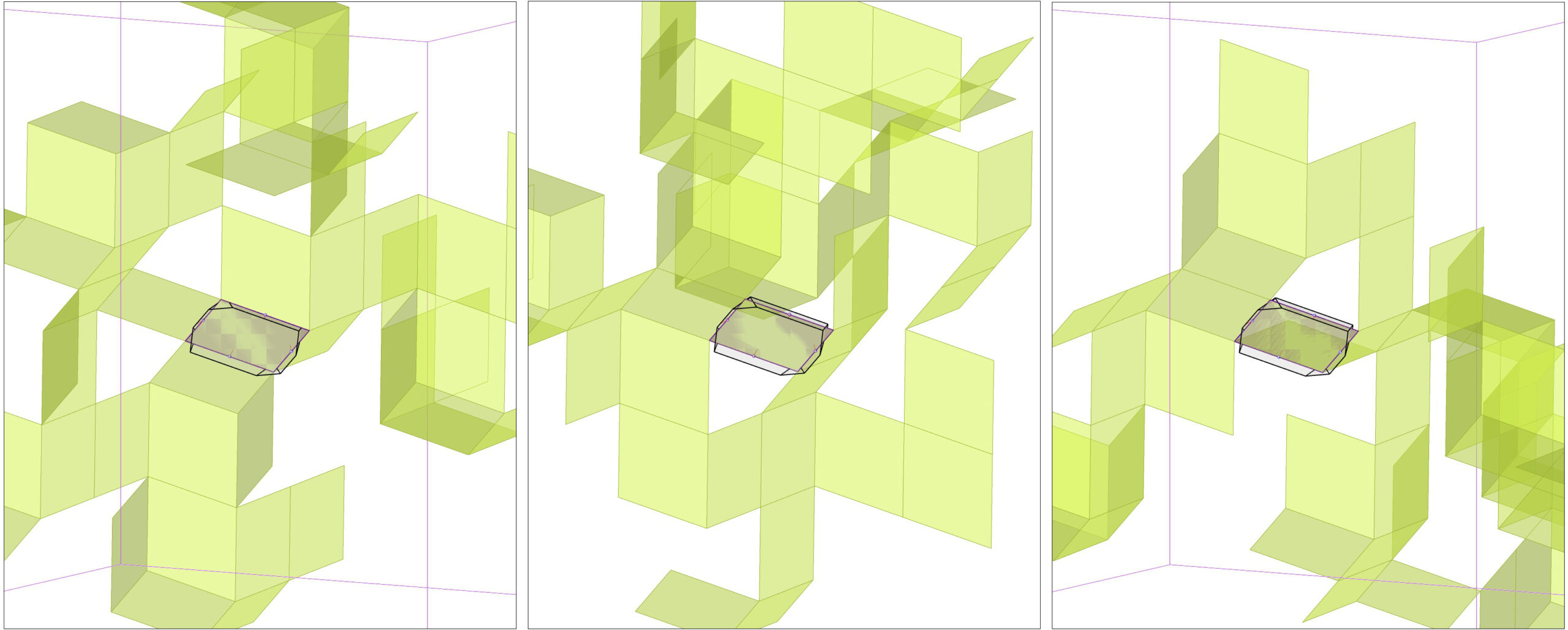
Manual for a discrete element aggregation of rhombic panels using the Wasp plugin for Grasshopper in Rhinoceros.
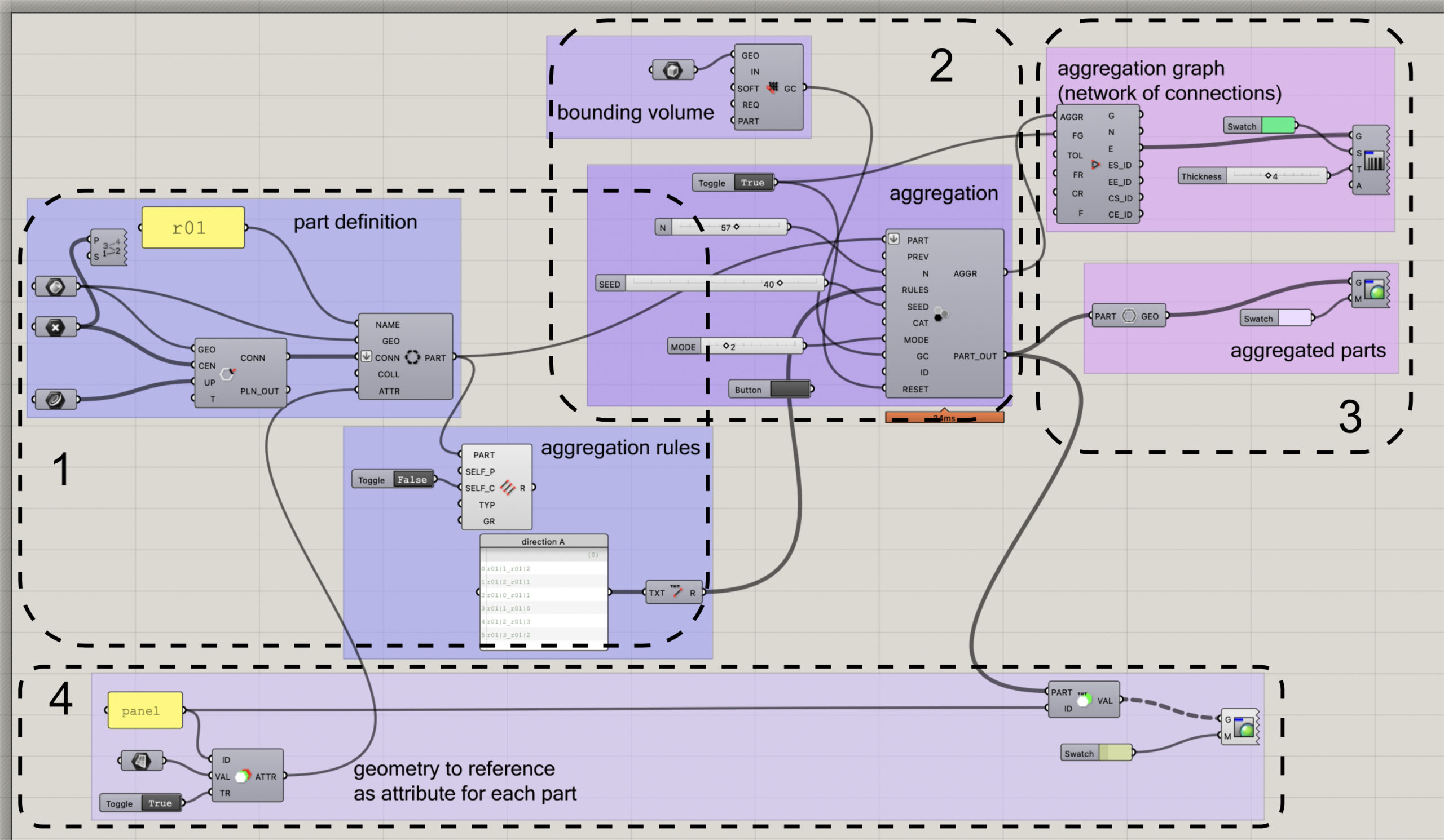
The definition is structured in 4 sections:
- part and connection rules
- aggregation
- output
- reference geometry
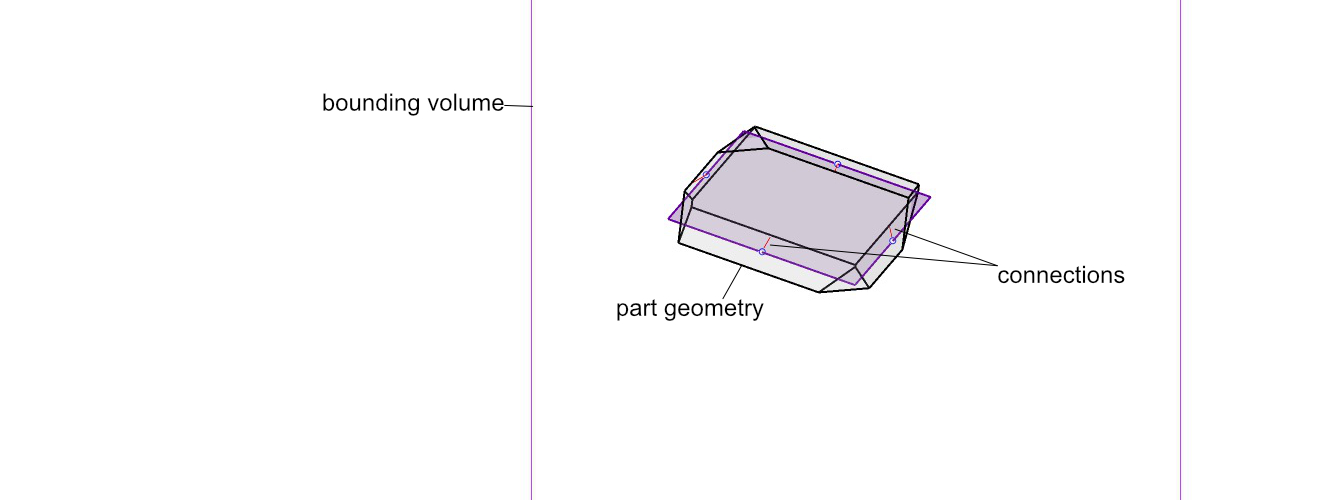
In section 1, a Wasp part is compiled based on geometry referenced from the Rhino workspace and combined with a set of connection rules for the aggregation system.
The specific geometry in this file is based on the Rhombic Dodecahedron, a polyhedron with 12 identical faces that can be packed to fill space.
In the definition, individual faces are used as parts. Based on the specific connections along with the associated rules, these panel-parts follow the structure of rhombic dodecahedral solids, resembling fragments of packed solids.
In section 2, parts are compiled in a stochastic aggregation, following the prescribed connection rules, producing a random configuration. The sliders connected to the aggregation component allow to change the amount of parts (N), flip through different configurations (SEED) and set a containing boundary (MODE).
Because the rhombic panels are symmetrical and all edges have the same length, the parts can be connected in multiple orientations along shared edges. This allows the aggregation pattern to escape the repetition of packed rhombic dodecahedral solids and instead form more differentiated configurations.
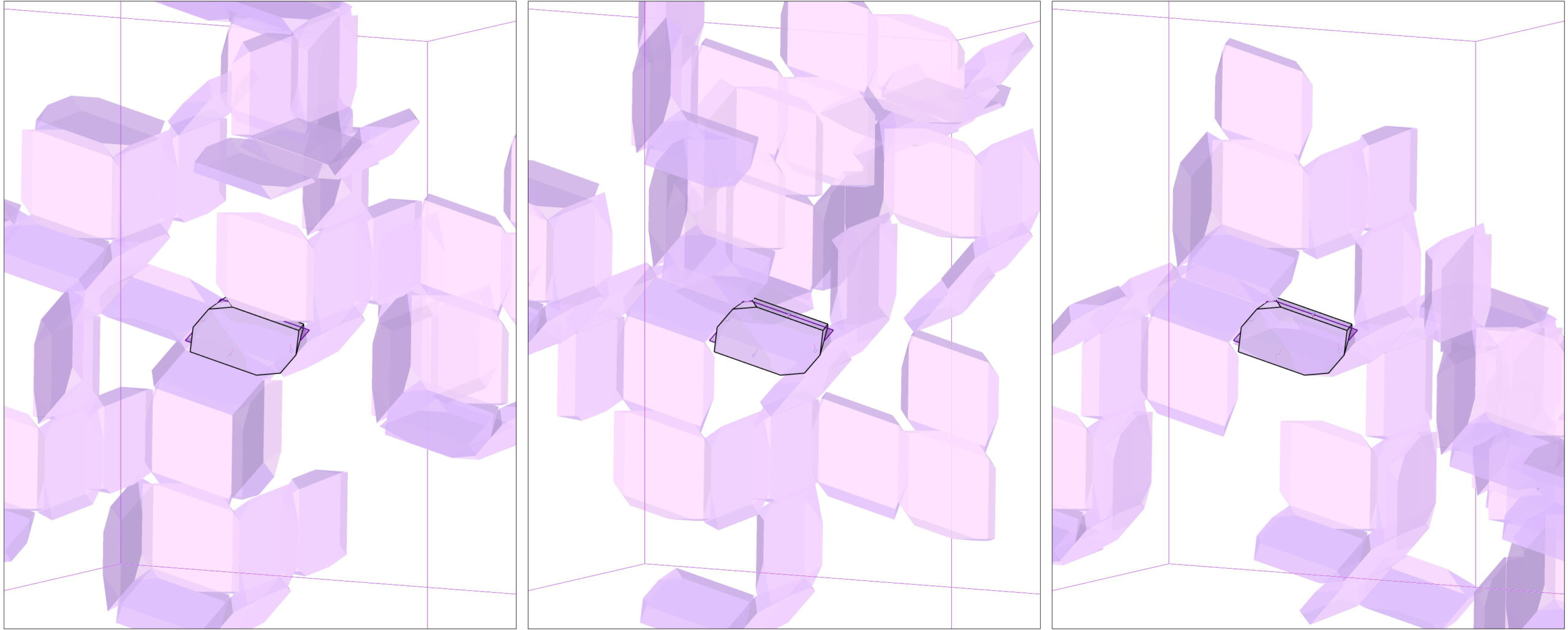
Despite the variability, the specific geometry of these rhombic panels allows to form interconnected structures. Strings of parts can connect at open ends to produce loops or cells. The image below shows the connection graph of the same configurations above, visualizing those cross-connections that occur spontaneously.
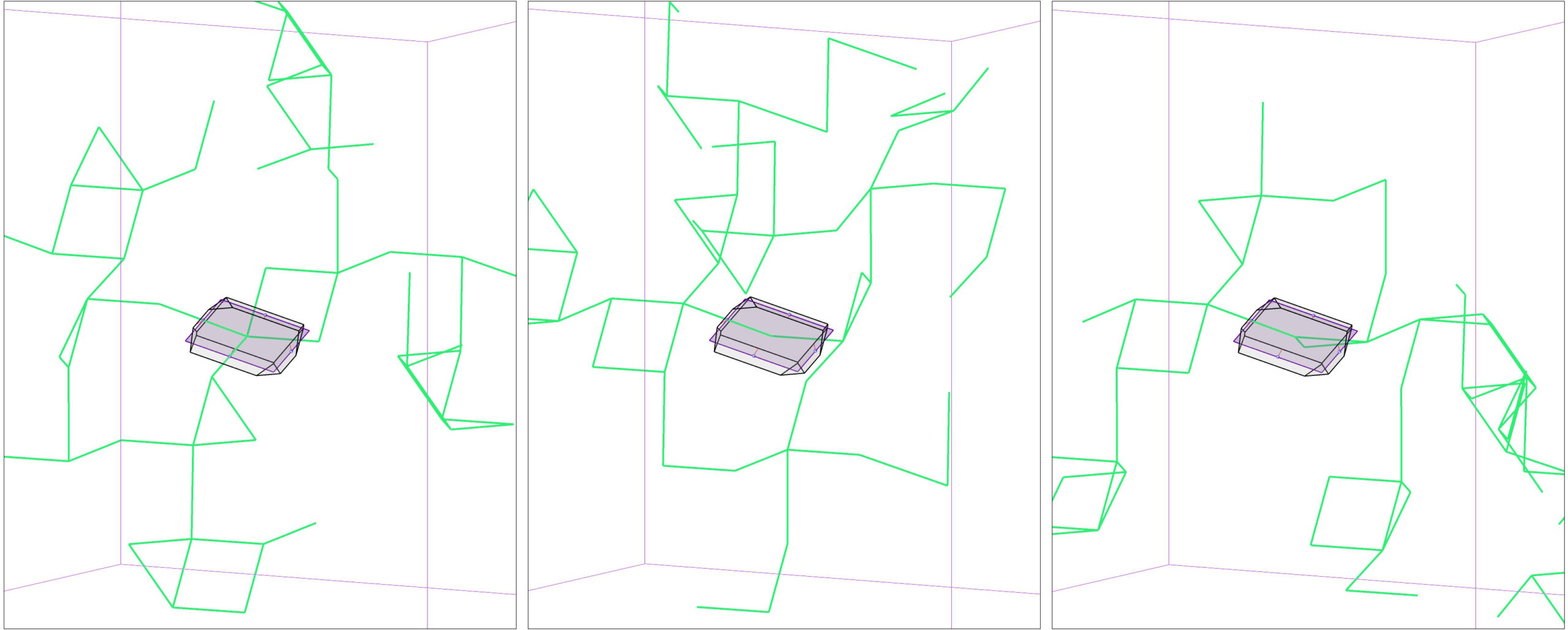
With more control mechanisms eg. through prescribing rule sequences using the graph grammar component, by restricting the set of rules, designing the boundary geometry, or using a hierarchical part structure, more organized lattice patterns or cellular structures could be designed with this template.
In section 4, alternative geometries can be referenced for each part instance using the attribute function in Wasp. The geometry is independent from the part geometry used to build the aggregation.