A set of various sized alternate detergent bottle caps. Should cover most of the available brands in central europe and hopefully beyond.
The XXS Cap has a threading facing the outside and only fits the large Ariel (100 washs) bottles. The XS to XXL versions fit most other (~95%) of the available bottles. For some (transparent bottles for the most part) you might need to slighty decrease the size in the slicer to make them fit (S and XS versions).
Filament considerations:
As we are planning to set up the structures several times, we decided on using recycled ABSx filament from nobufil, a local company in Austria, just outside of Vienna. If you are deciding to use ABS, don’t forget to check the shrinkage of your filament before printing and scale the caps by that value in your slicer. Otherwise the standard 25mm PVC pipes (we recommend using) will not fit.
If you are planning to set up your structures outside for extended periods of time, we recommend using ASA, as this has a higher UV resitance than ABS.
We believe PET-G will also work. Especially if you are not planning to use it for extended periods outside under harsh conditions (UV exposure).
PLA might work, but for depending on the size of your structure we wouldn’t recommend it at all as they have to transfer structural loads. PLA is very brittle and especially not an option if you are planning to build outside.
Flex Caps:
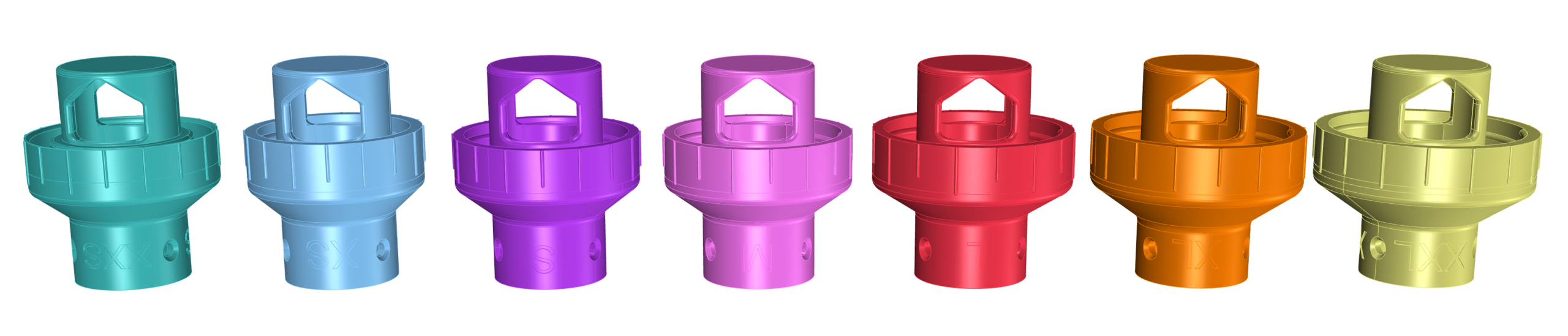
Recommended 3d printing settings:
3 shells, at least 25% infill (we used 40%) and with a brim (to increase the connection to the build plate). No supports needed.
file format: individual zip files containing an .OBJ + .MTL (nurbs) and a .STL (mesh) version of each cap.
Cap Size Testers:

Before you start printing actual Flex Caps you can first print this set of thread and size testers to determine which caps will fit your bottles best, or how you need to scale them to match your local detergent bottle market… Hopefully helps with not wasting filament 😉
file format:zip file containing an .OBJ + .MTL (nurbs) and a .STL (mesh) version of each tester.
Ball Caps:
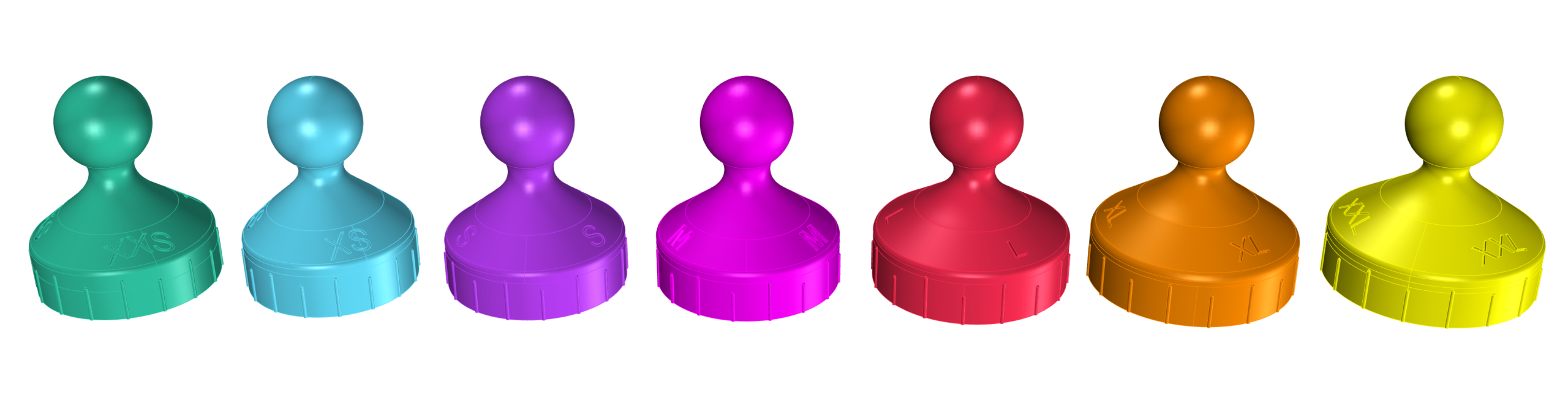
For the connection to the ground we designed these balljoint caps, which allow for a wide range of angles on how the bottom bottles relate to the ground plane.
Recommended 3d printing settings:
3 shells, solid infill (as the diameter where the ball is connected to cap is quite small and otherwise might break off too easily), and with a brim (to increase the connection to the build plate). No supports needed.
file format: individual zip files containing an .OBJ + .MTL (nurbs) and a .STL (mesh) version of each cap.
Footer Plate:
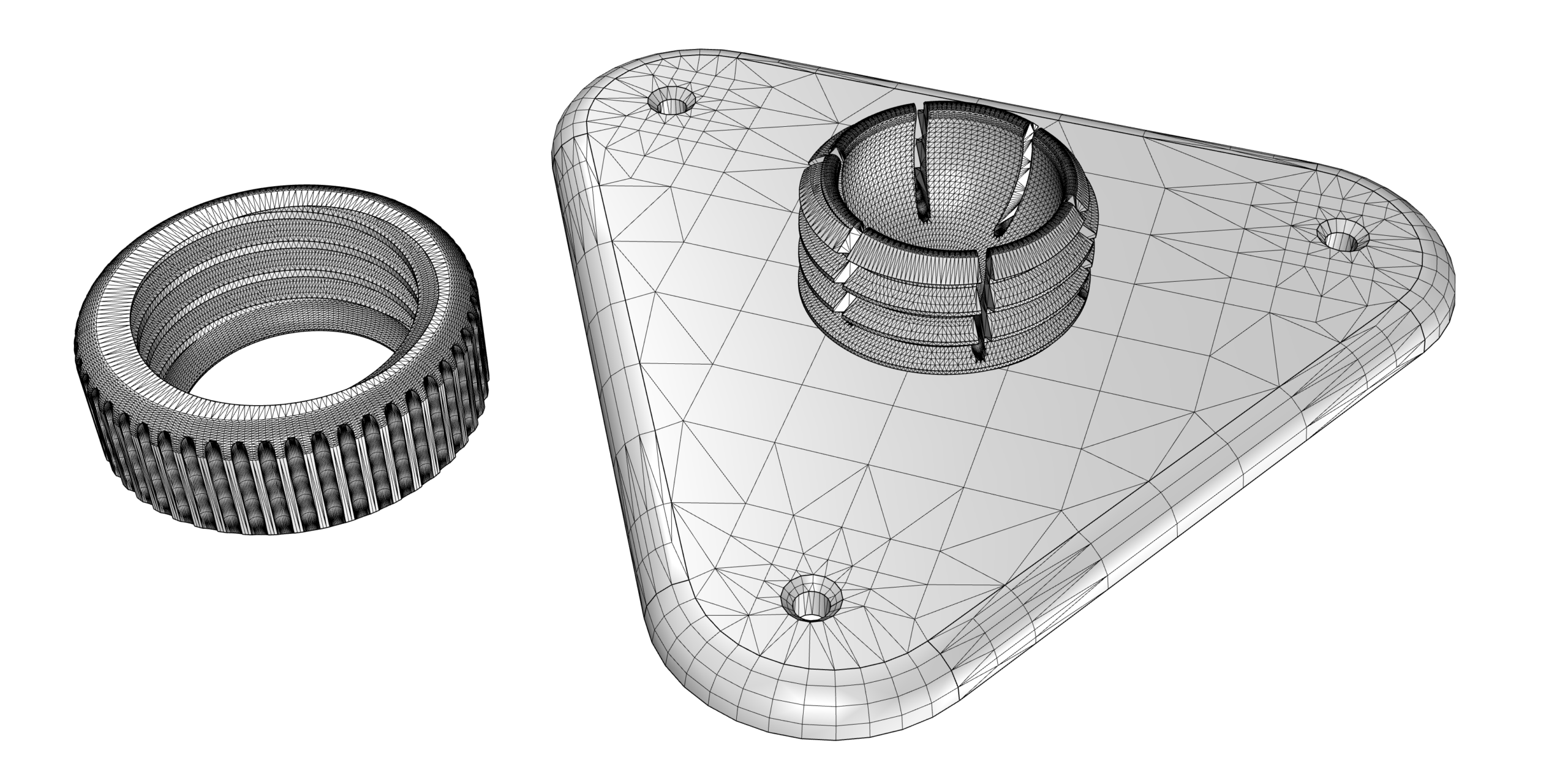
To connect the Ball Caps to the ground you can use this footer. It can be screwed into the floor or an additional wood sheet. If you set it up outside on soft ground you can also use standard tent pegs.
Recommended 3d printing settings:
3 shells, 40% infill. 0.2 layerheight or less (larger might result in the threading not working). No supports needed.
file format: zip file containing two .STL (mesh).
This work and all files related to it are shared under the Creative Commons: Attribution-NonCommercial-ShareAlike 4.0 International (CC BY-NC-SA 4.0) Licence.