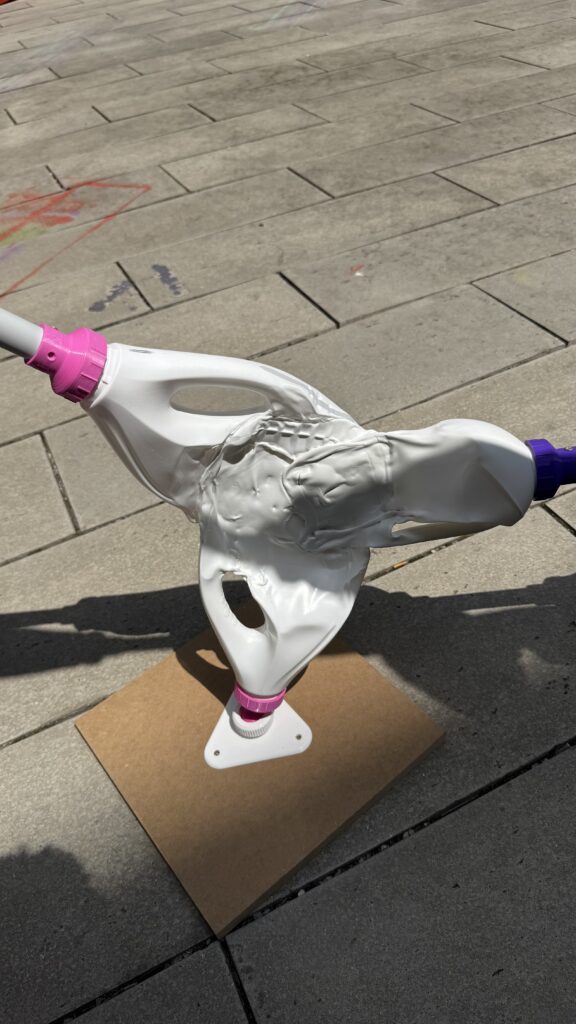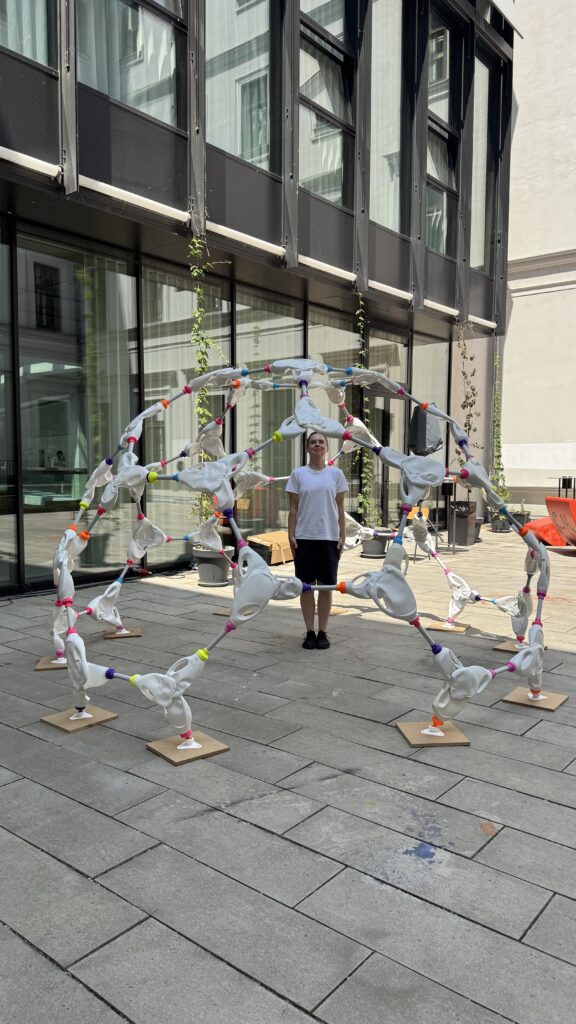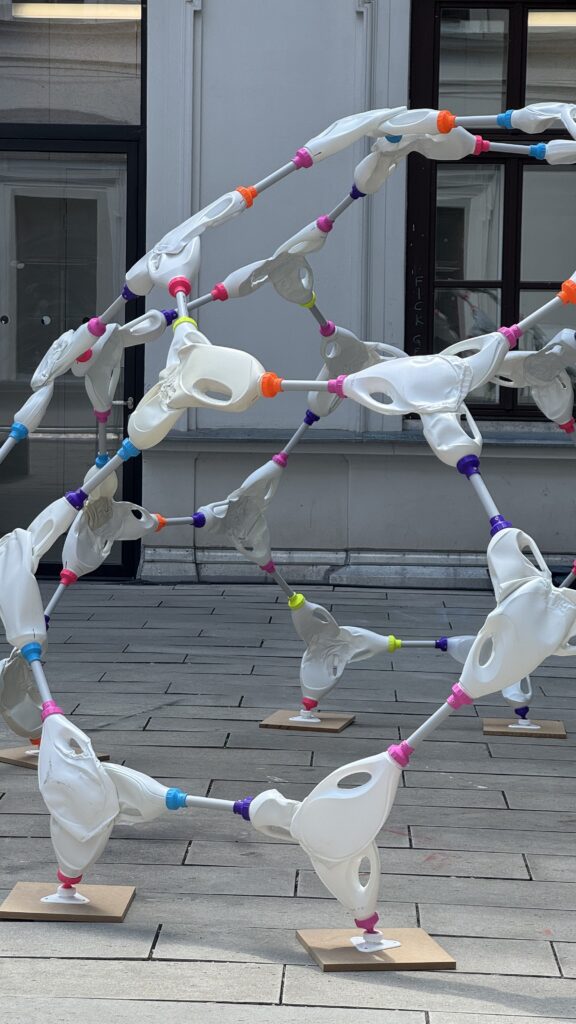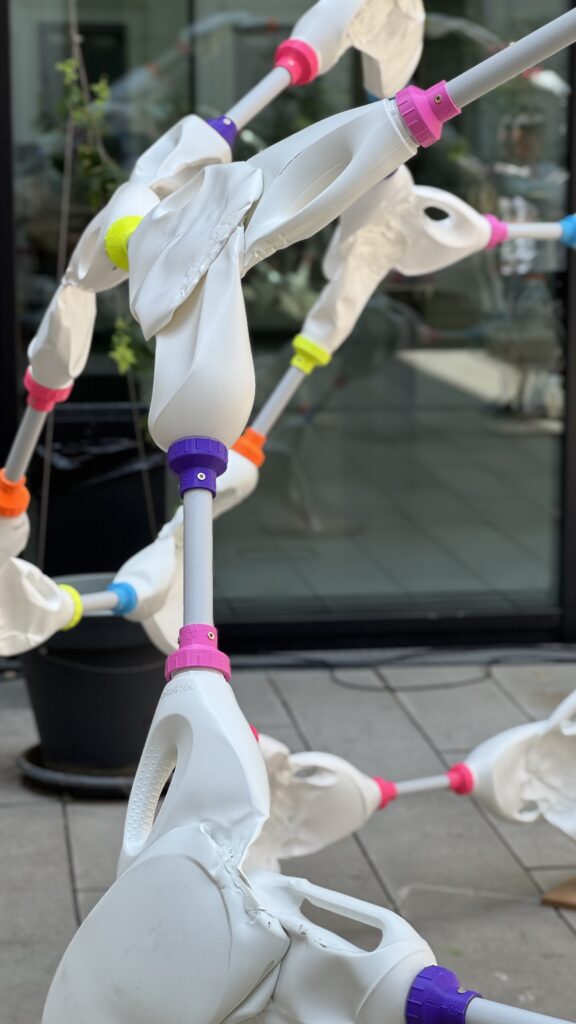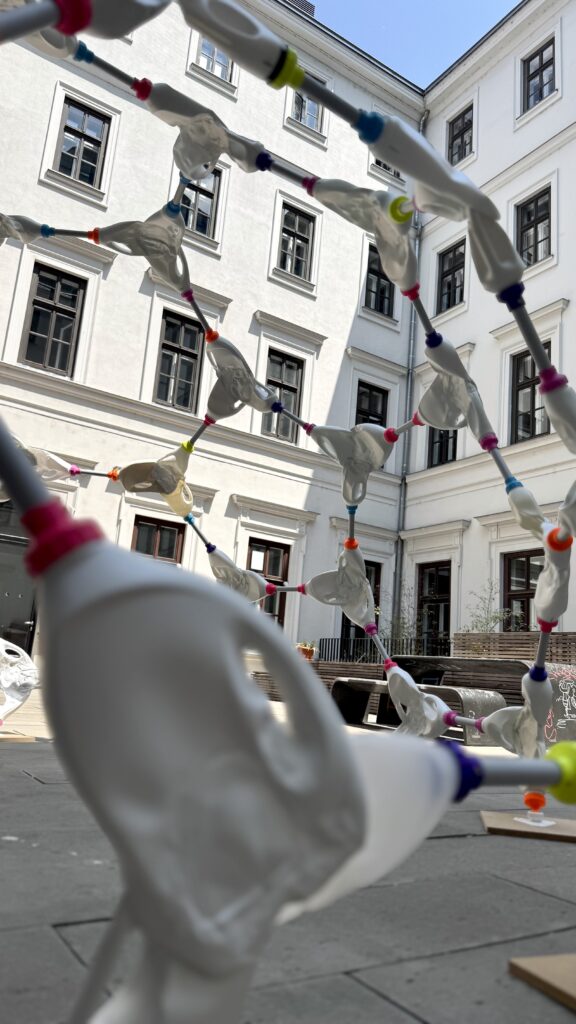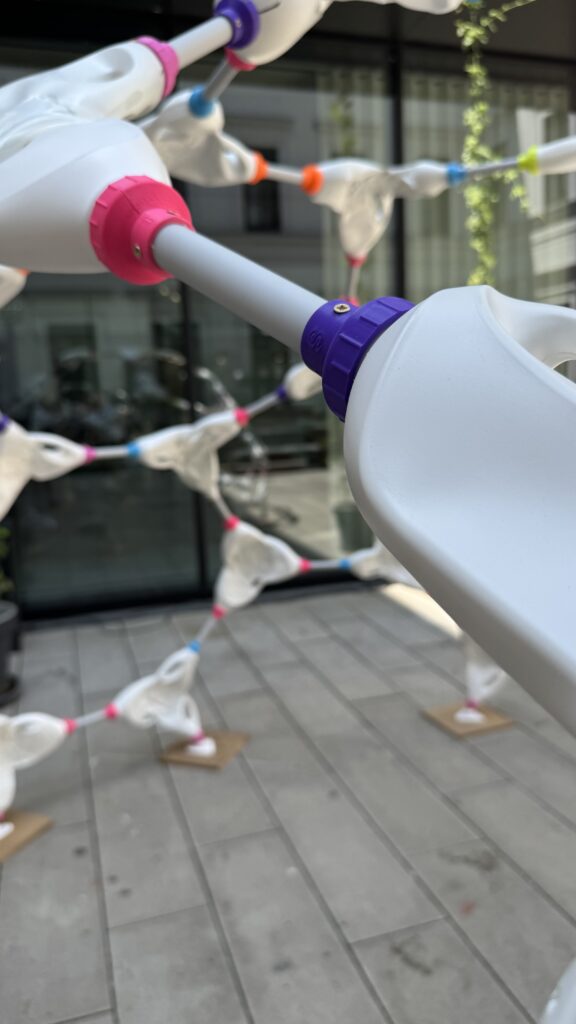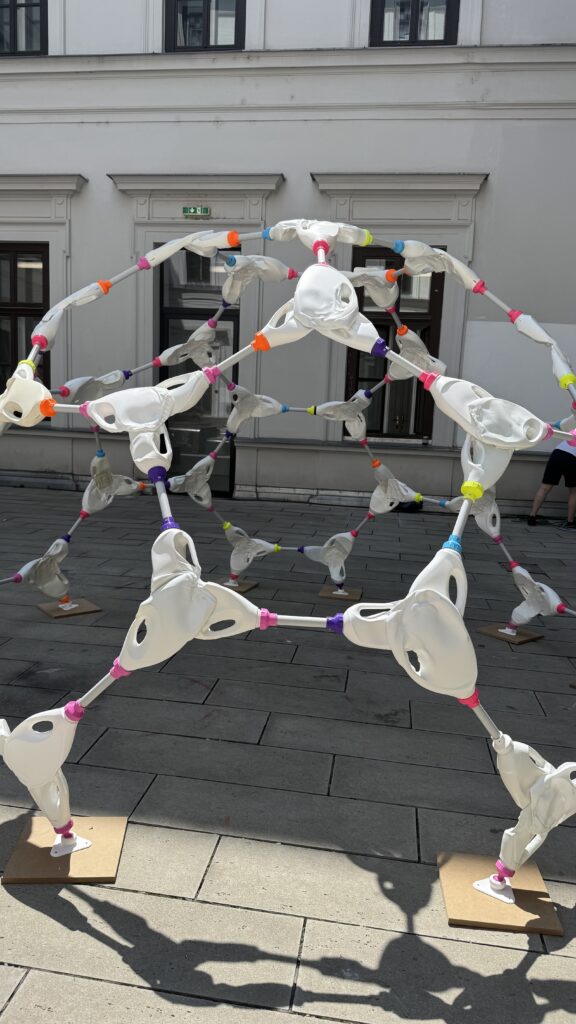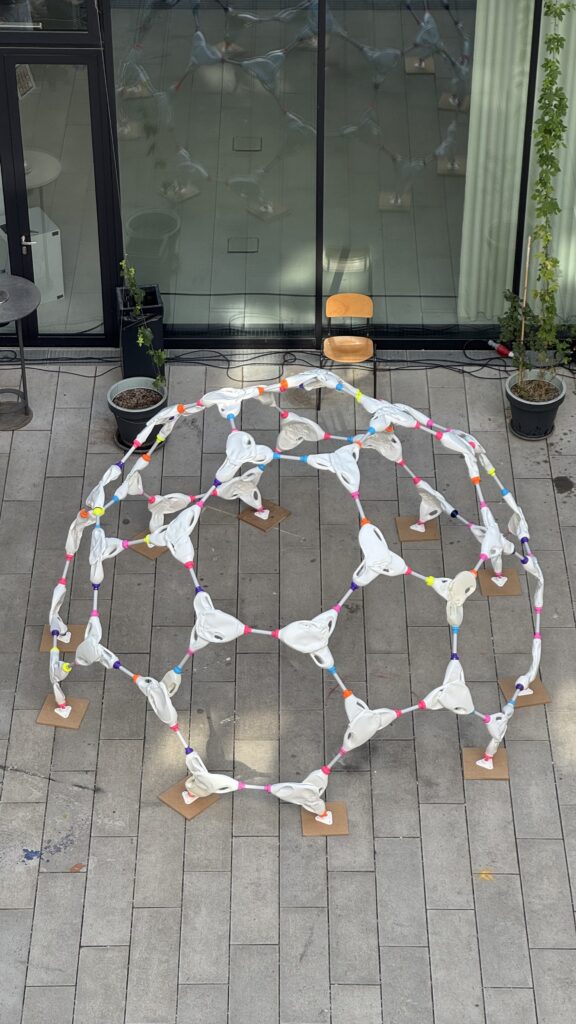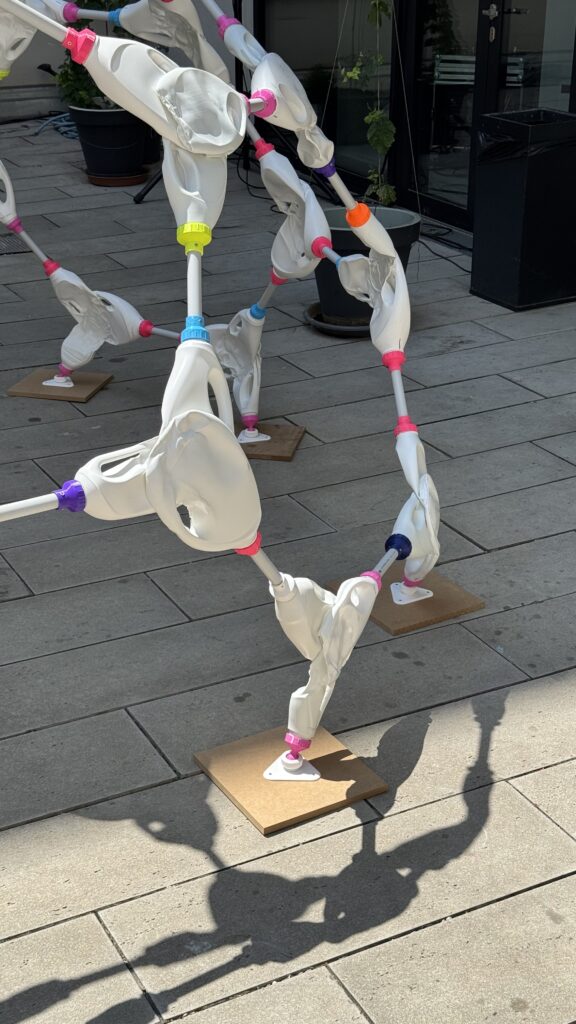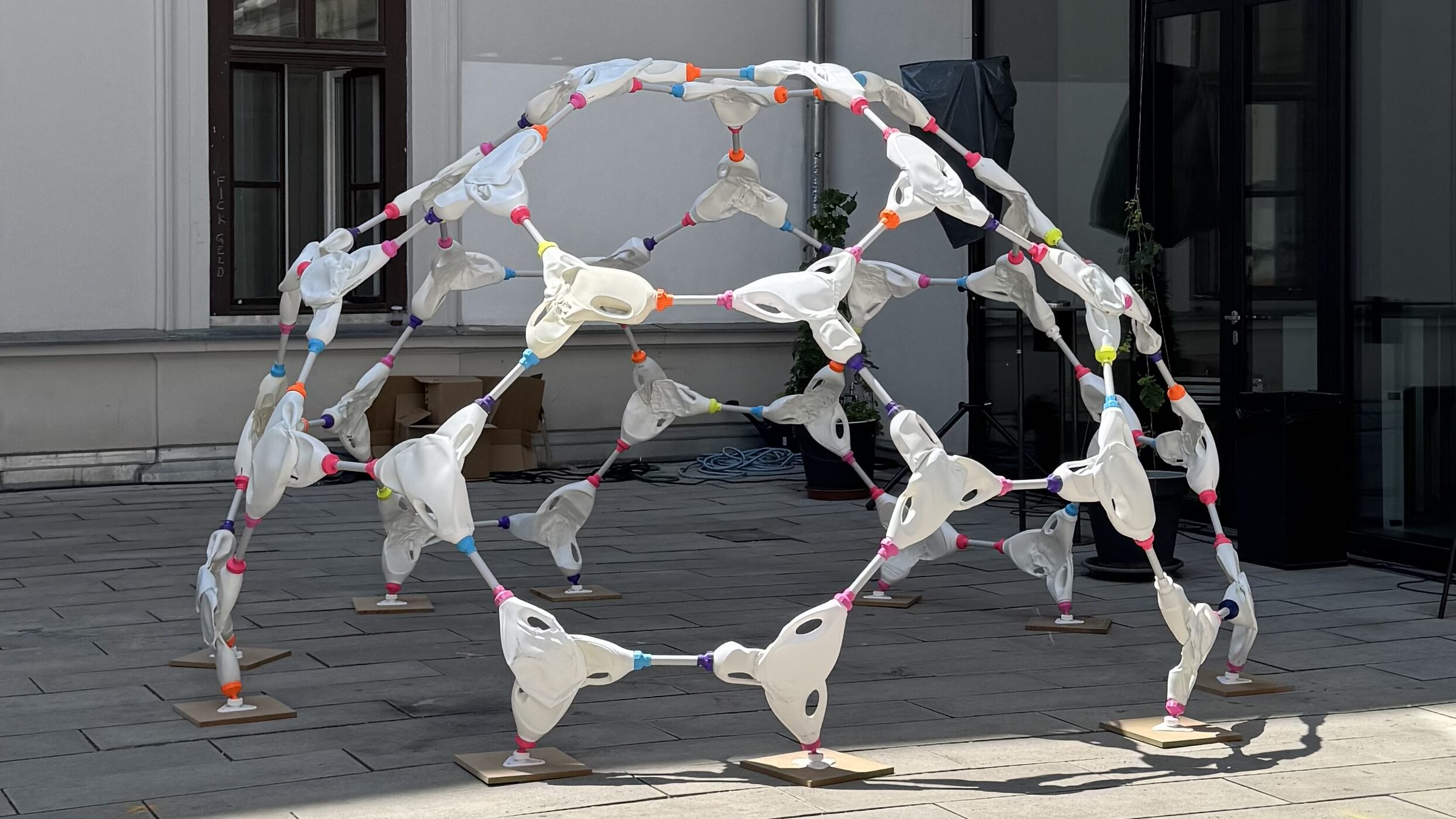
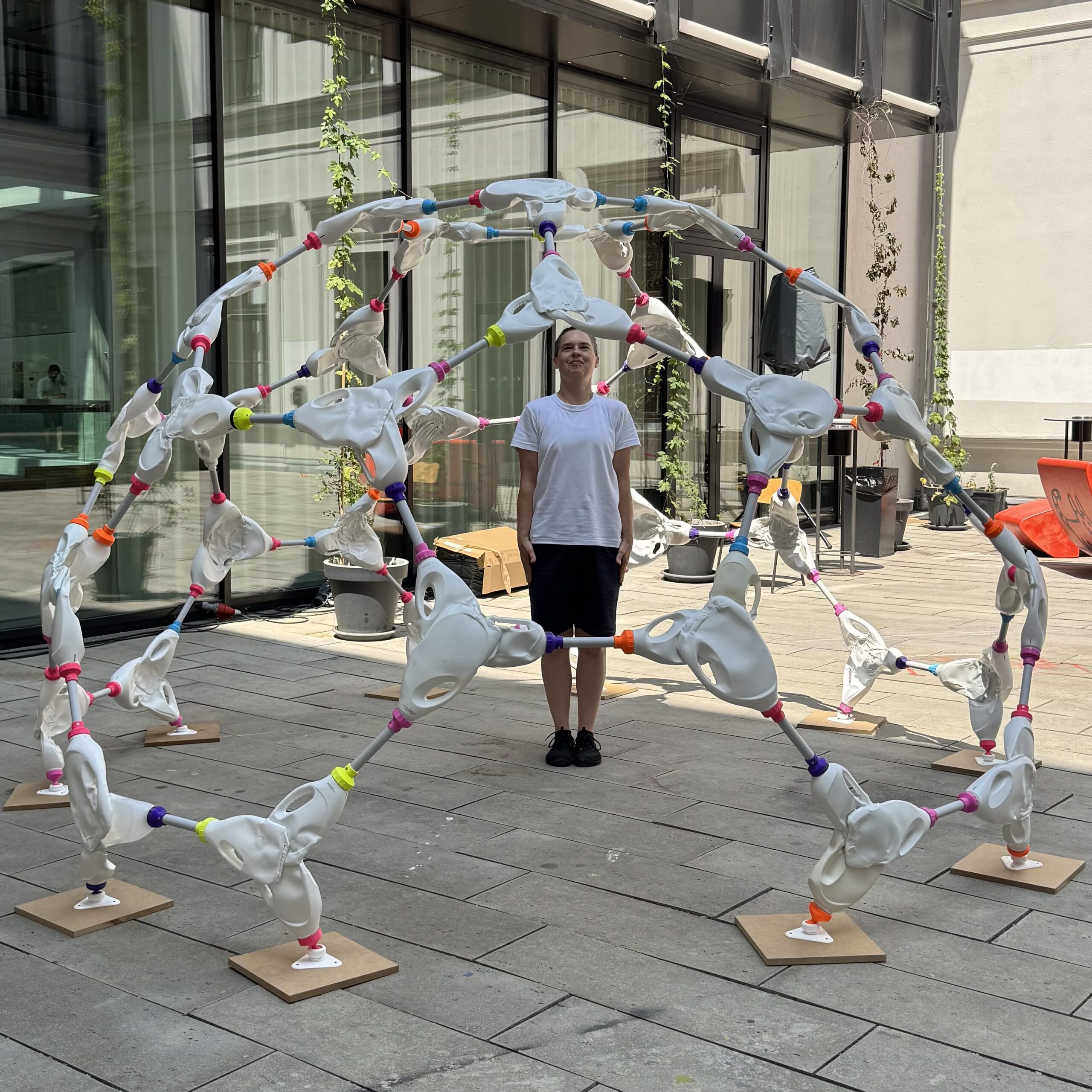
After months of collecting detergent bottles, experimenting with connectors, heat-welding plastic nodes, printing prototypes, and testing assemblies, we built our first Flex.Node geodesic dome.
At this year’s Angewandte Festival, we presented the project to the public for the first time. Over four days, visitors could not only walk inside the dome but also explore the development process behind it.
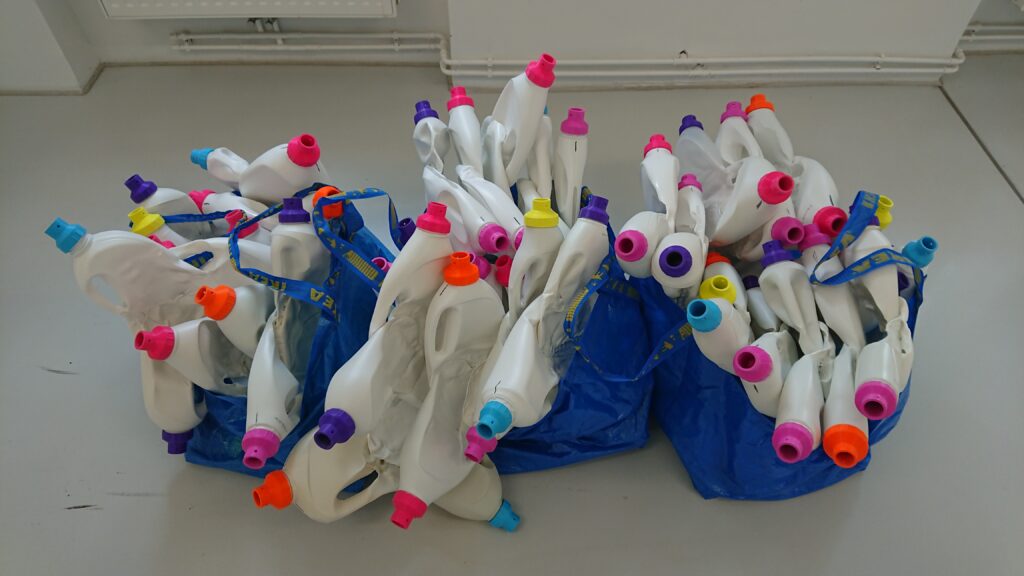
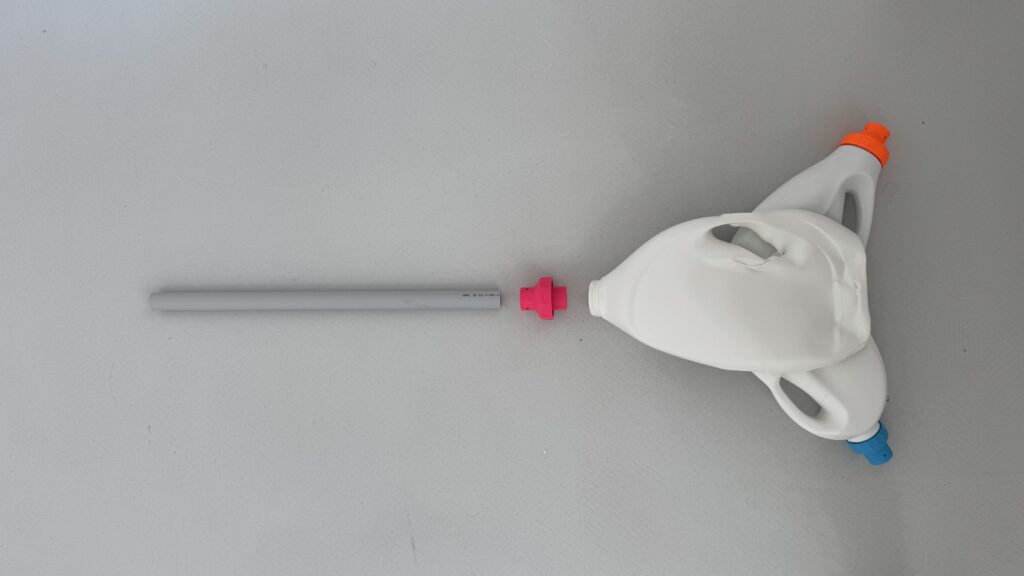
For the installation, we transformed 120 detergent bottles into 40 bottle nodes, printed 110 custom bottle caps in different sizes, developed 10 ball-joint connections to anchor the structure to the ground and cut 50 PVC pipes.
Set Up
Like most prototypes, the first assembly didn’t work.
Our initial design used 50 cm long PVC pipes. While the geometry looked promising in the computer model, the longer pipes created too much leverage. The bottle nodes were compressed, several caps came loose, and the structure collapsed.
During the assembly, we also noticed that not all detergent bottles performed equally. Some brands were much more fragile than others and deformed under the higher forces. If we want to build larger structures with longer pipes in the future, selecting stronger bottles will become an important part of the process.
We tried supporting the dome with ratchet straps and hoped the textiles inside some of the hexagons would help stabilise the structure, but while adding the final row, the dome collapsed.
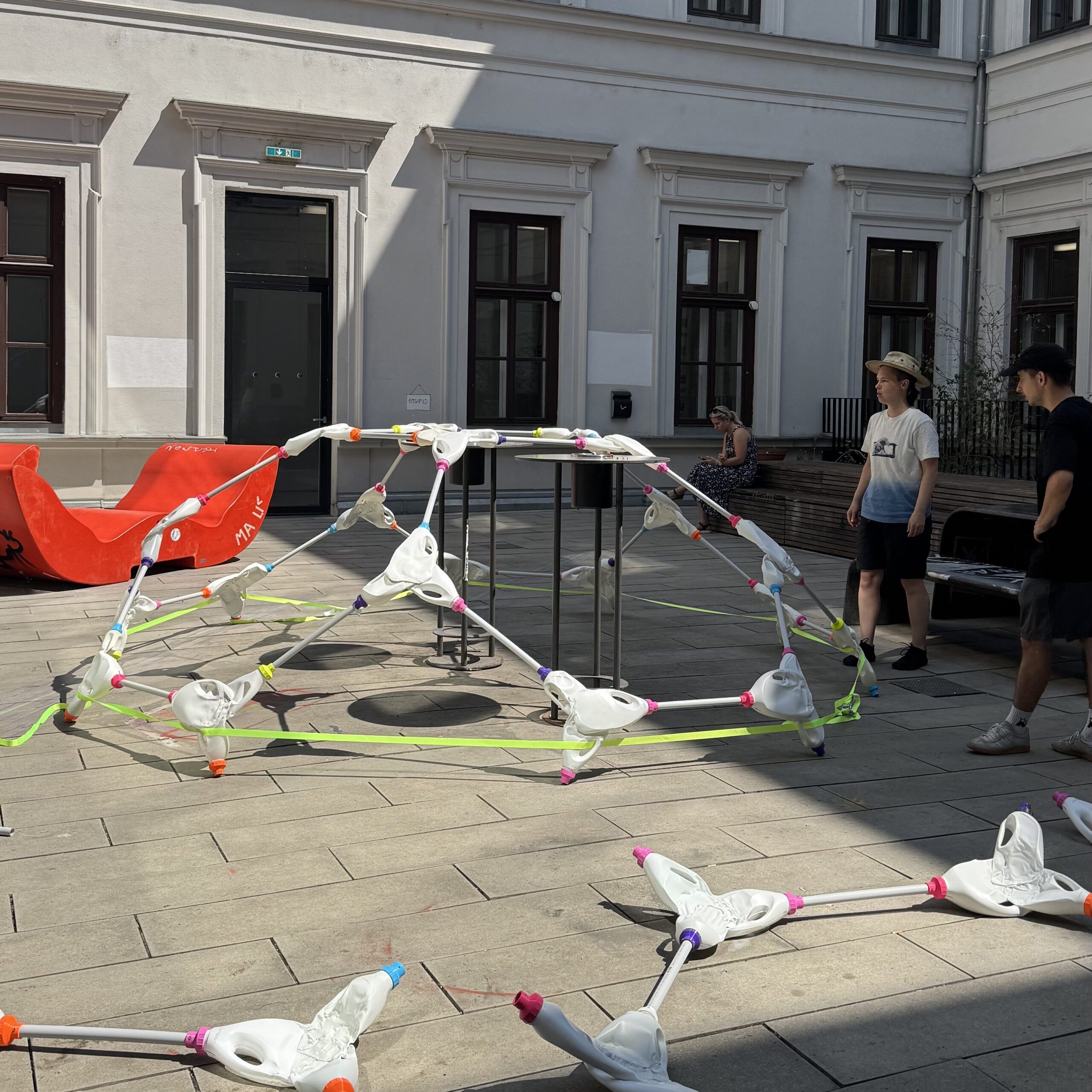
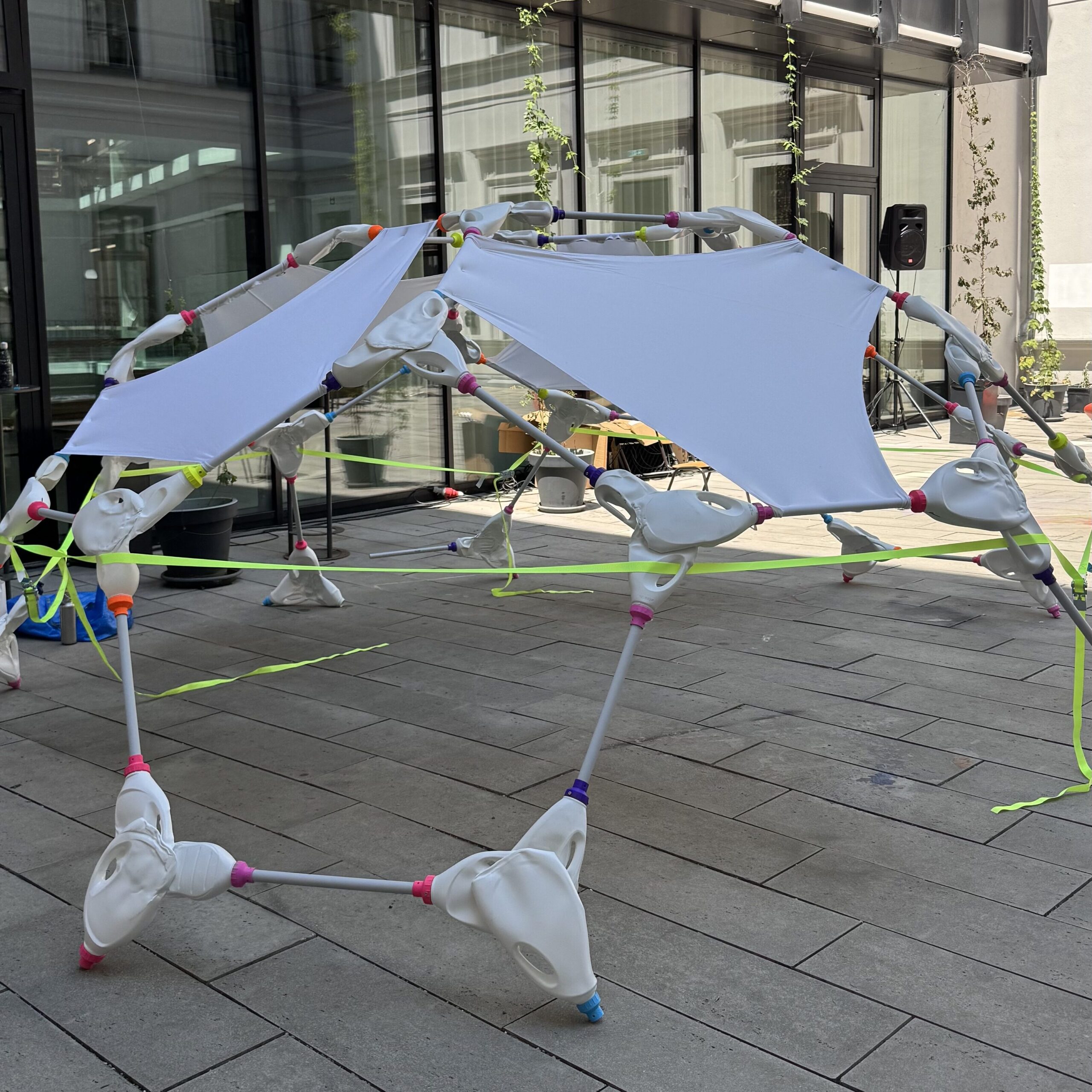
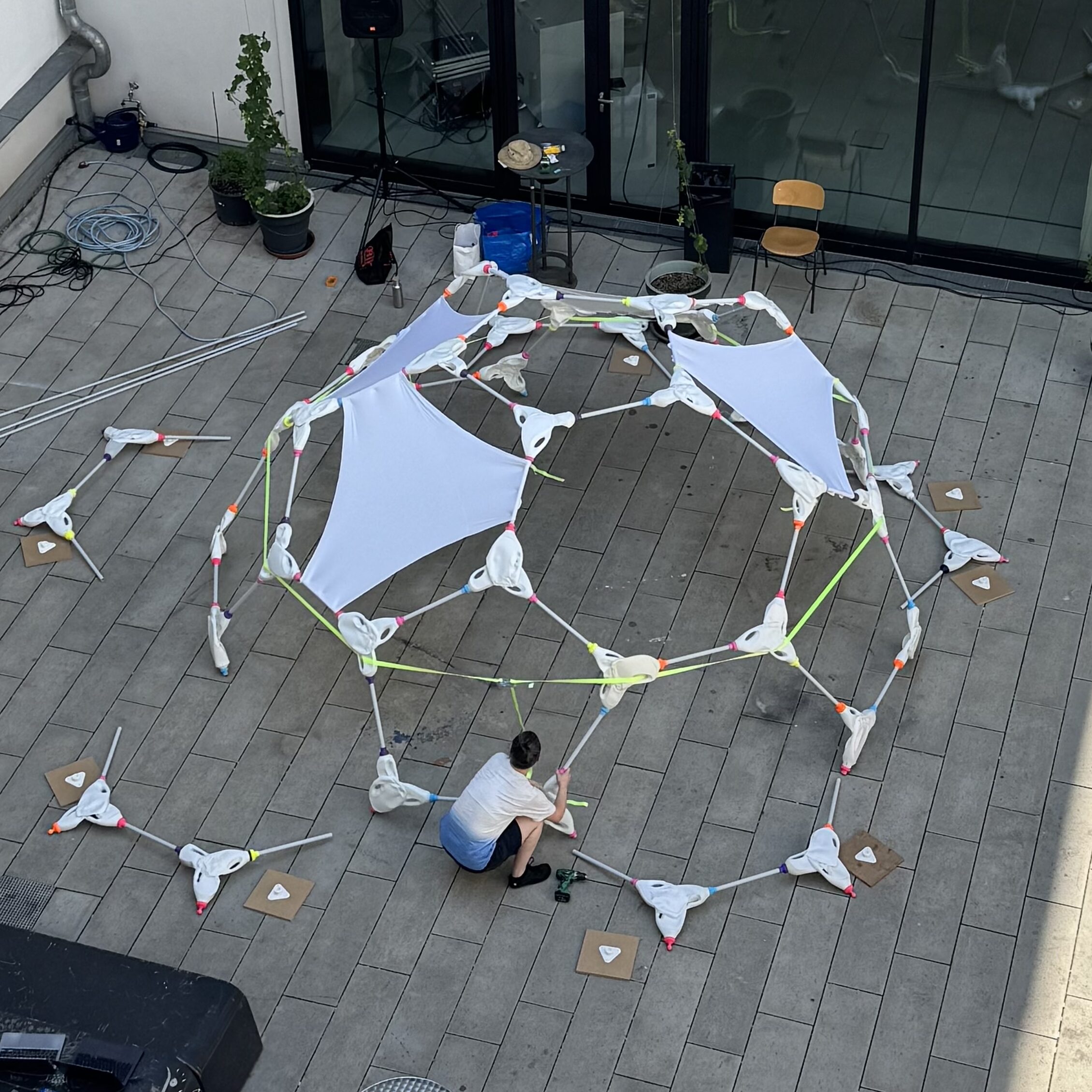
Instead of redesigning the nodes, we changed just one parameter: we cut every pipe in half.
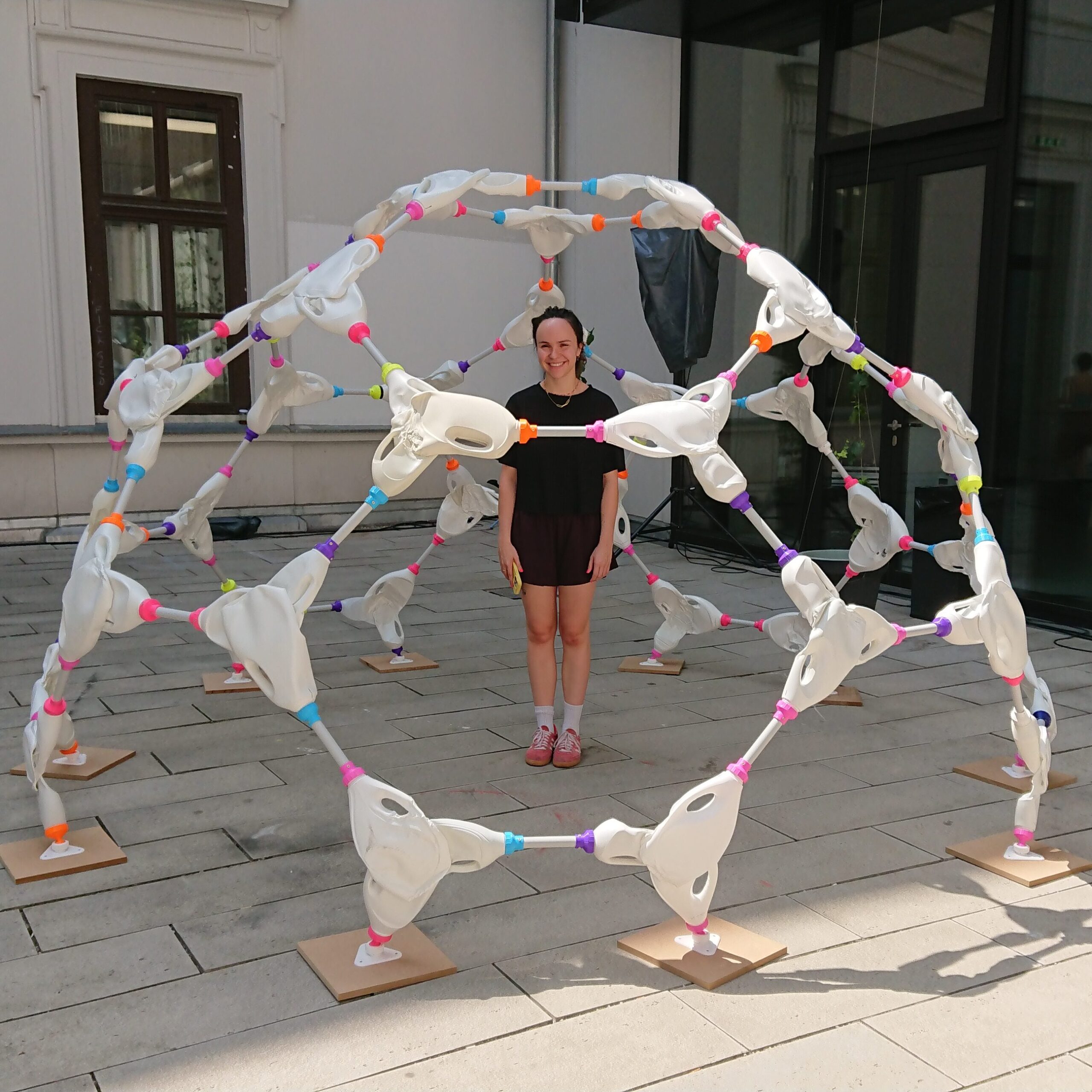
Using 25 cm long pipes reduced the forces acting on the nodes and made the structure much more stable. The final dome was smaller than planned, but it remained stable throughout the festival.
Developing an Assembly Strategy
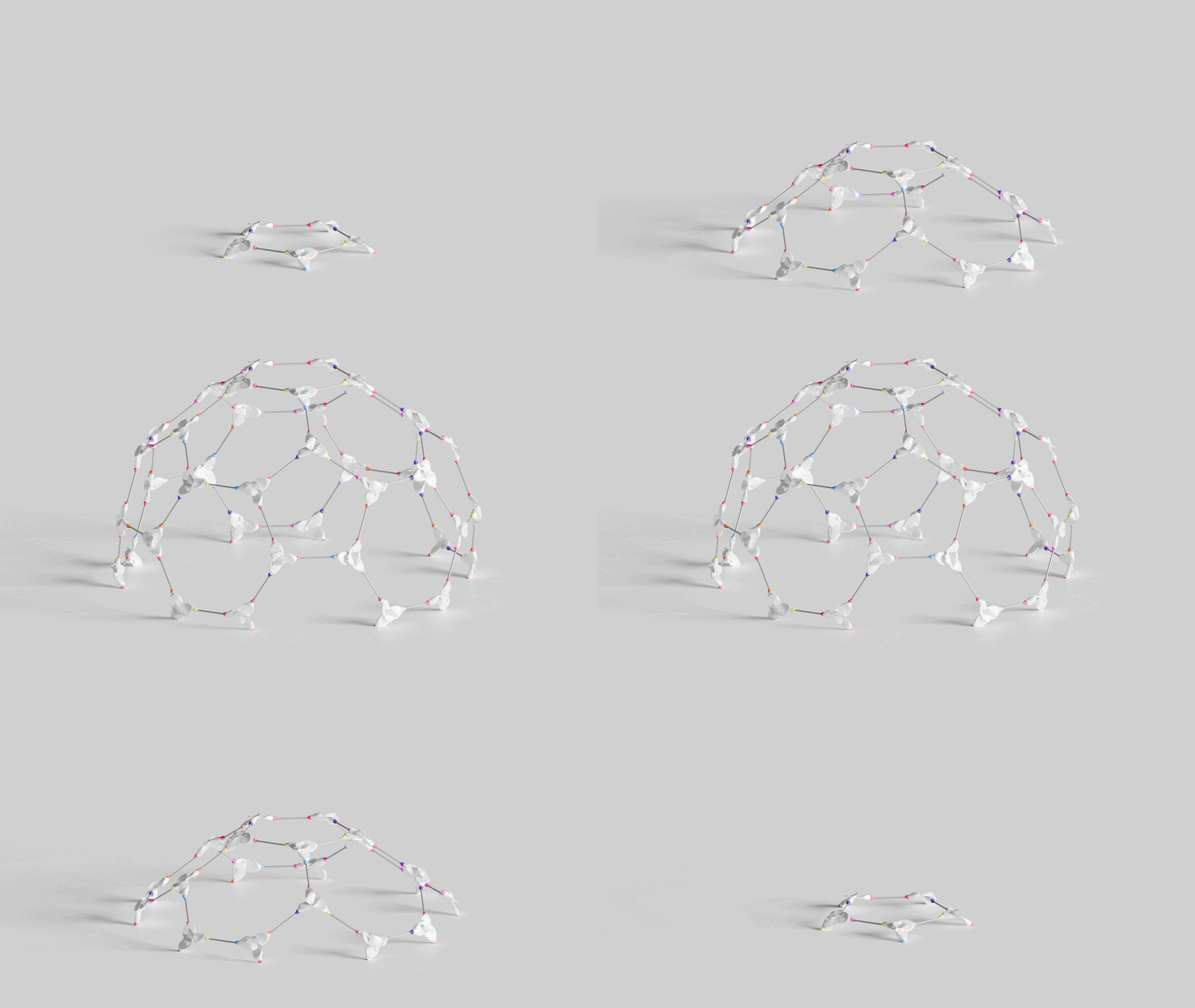
We started with the central pentagon at the top and added one ring at a time. Each new section was pre-assembled by connecting two bottle nodes before attaching it to the growing structure. Every pipe was fixed into the bottle caps with two screws before the next ring was added. As the dome grew, the centre was gradually lifted until the final ring could be connected to the ball joints anchored to MDF plates.
Thanks to the lightweight bottle nodes and PVC pipes, the dome could be assembled by three people without additional support. Once we had established the assembly sequence, disassembly was even faster and could be done by just two people.
The GIF below shows the assembly and disassembly process.
Showing the Development
Alongside the finished dome, we also showed the development process: the original detergent bottles, different bottle cap sizes, moulds, failed prototypes, and connector variations.
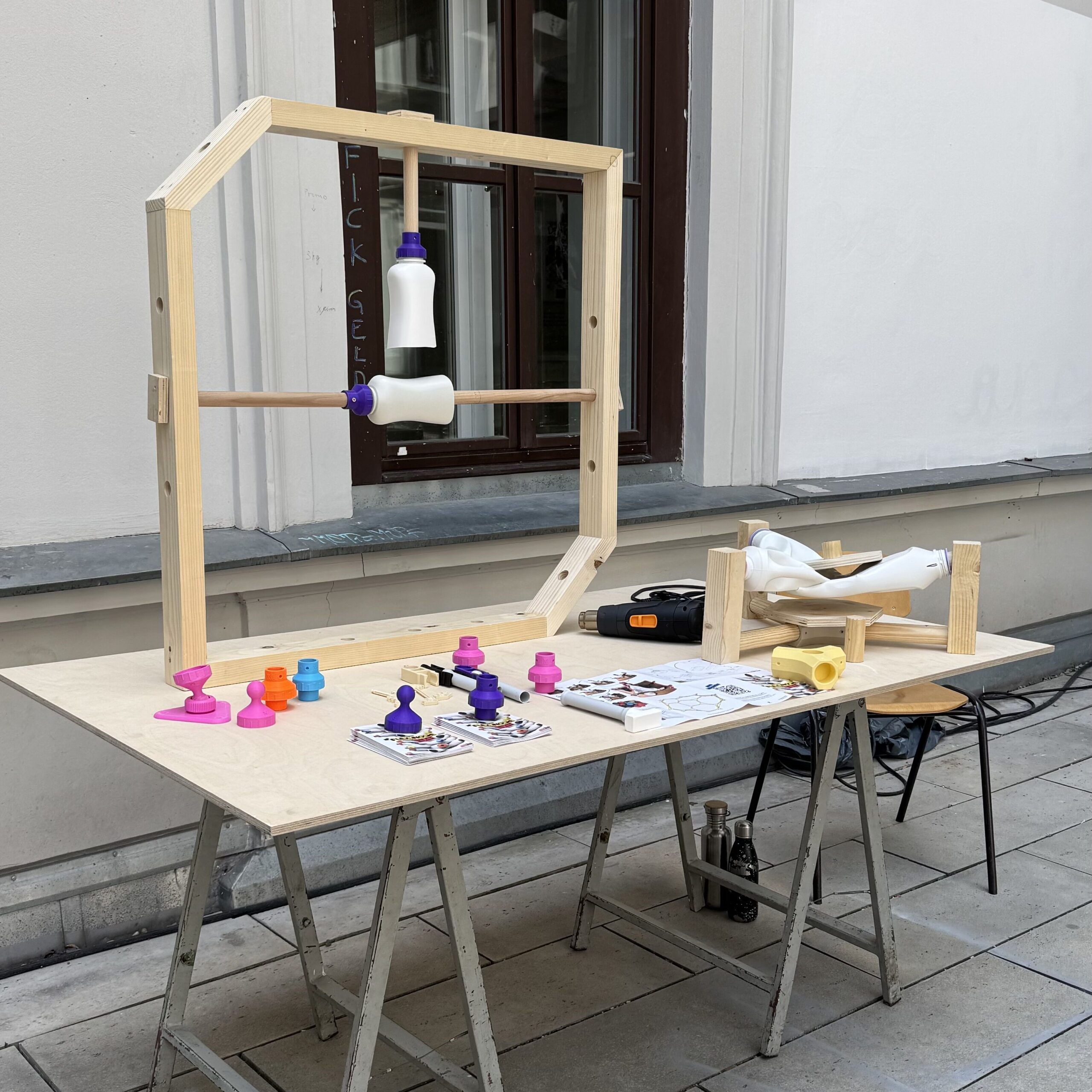
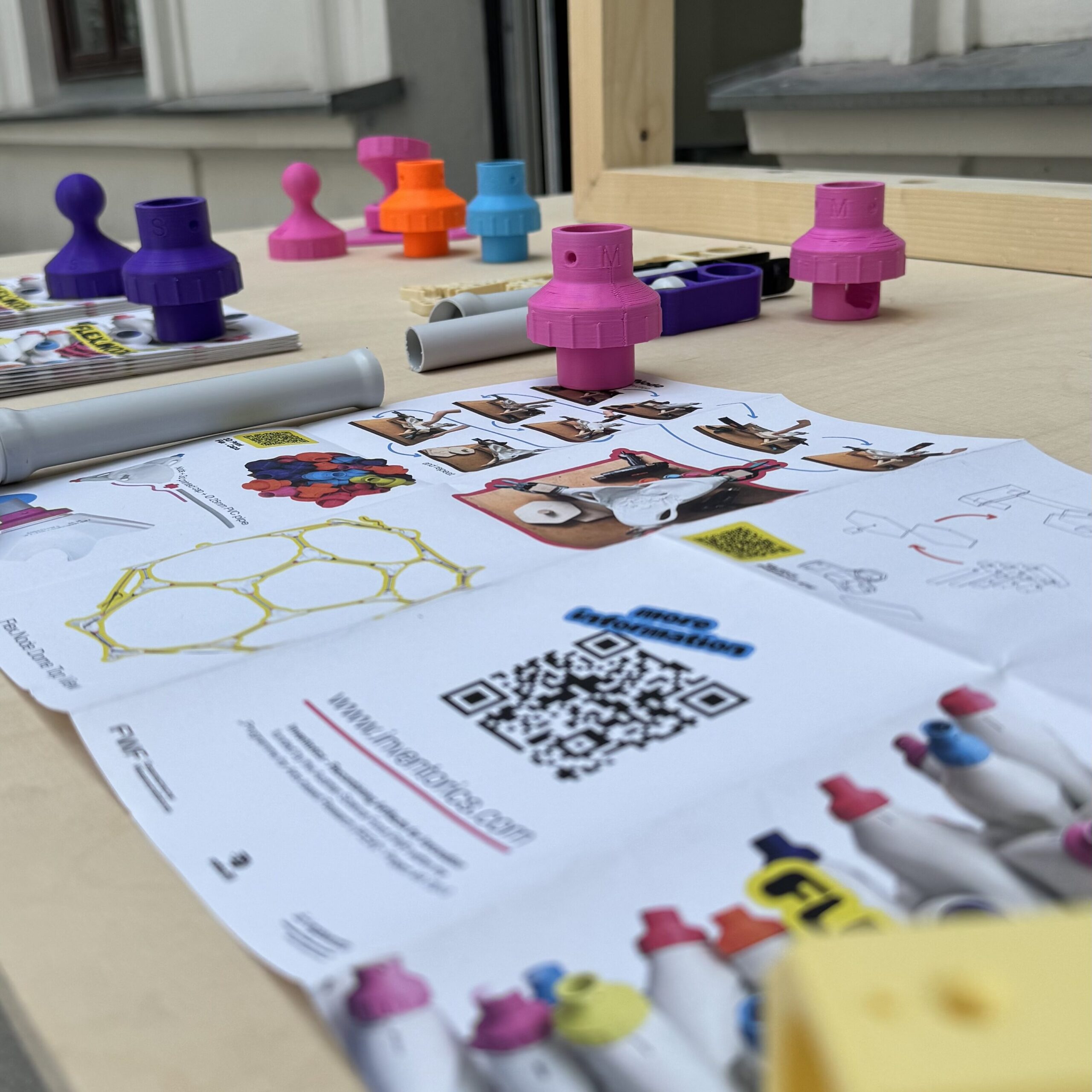
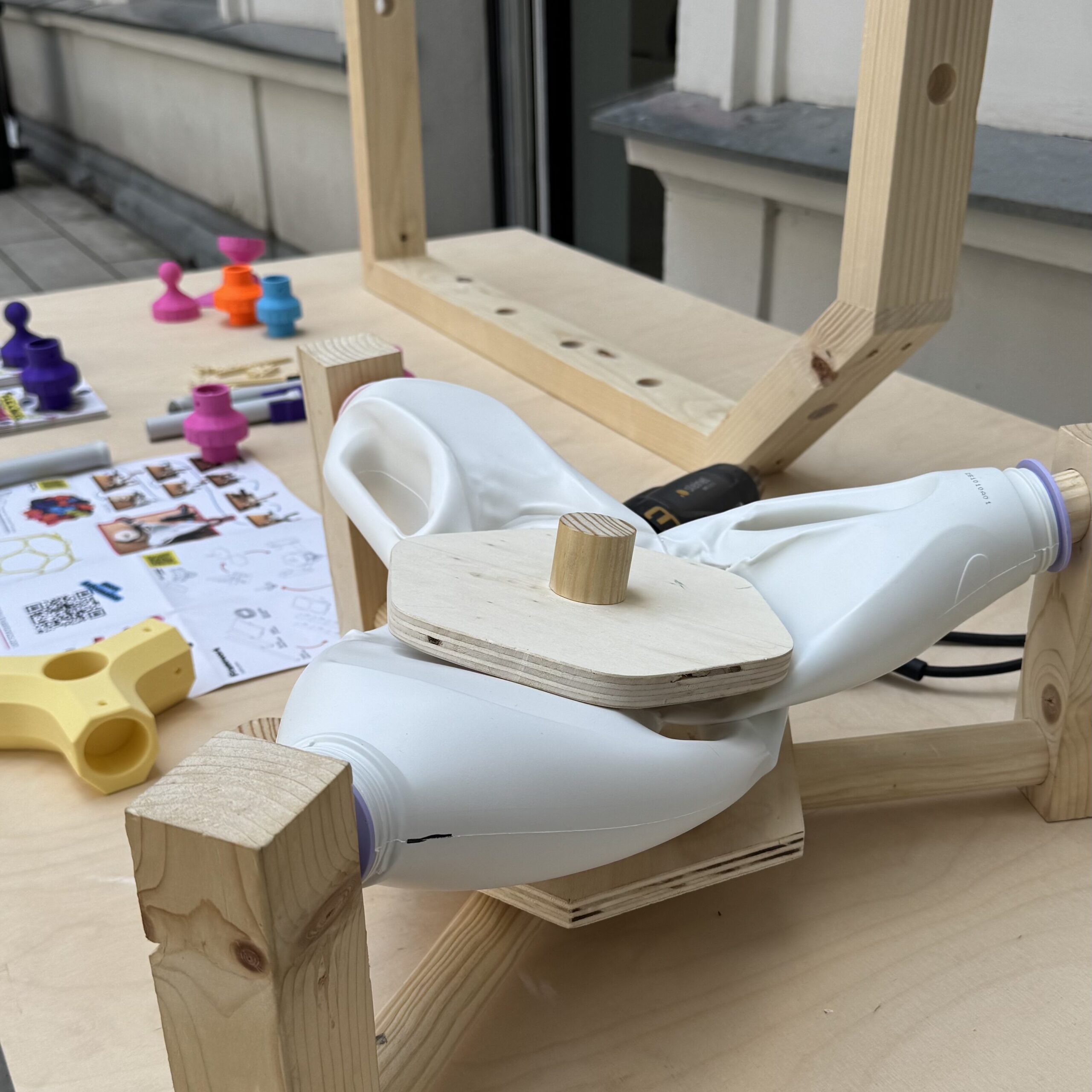
Rather than only presenting the final structure, we wanted to show how the system evolved through testing, failure, and small improvements.
Here some additional images oft he finished structure.