
We constructed a quarter dome using detergent bottle Flex Nodes and PVC pipe connections. The prototype consisted of 20 nodes (60 bottles), 25 PVC pipes, and 50 3D-printed ABS connectors.
The assembly began by laying out all components flat on the ground. Each node was pre-equipped with the correctly sized 3D-printed caps.
We started from the central pentagon and inserted the pipes step by step into the connectors, gradually expanding outward. Following the geometric logic of a bucky dome, the structure began to self-organize as connections were completed. Once the outer ring was closed, the system was expected to stabilize itself and gain height through internal force distribution.
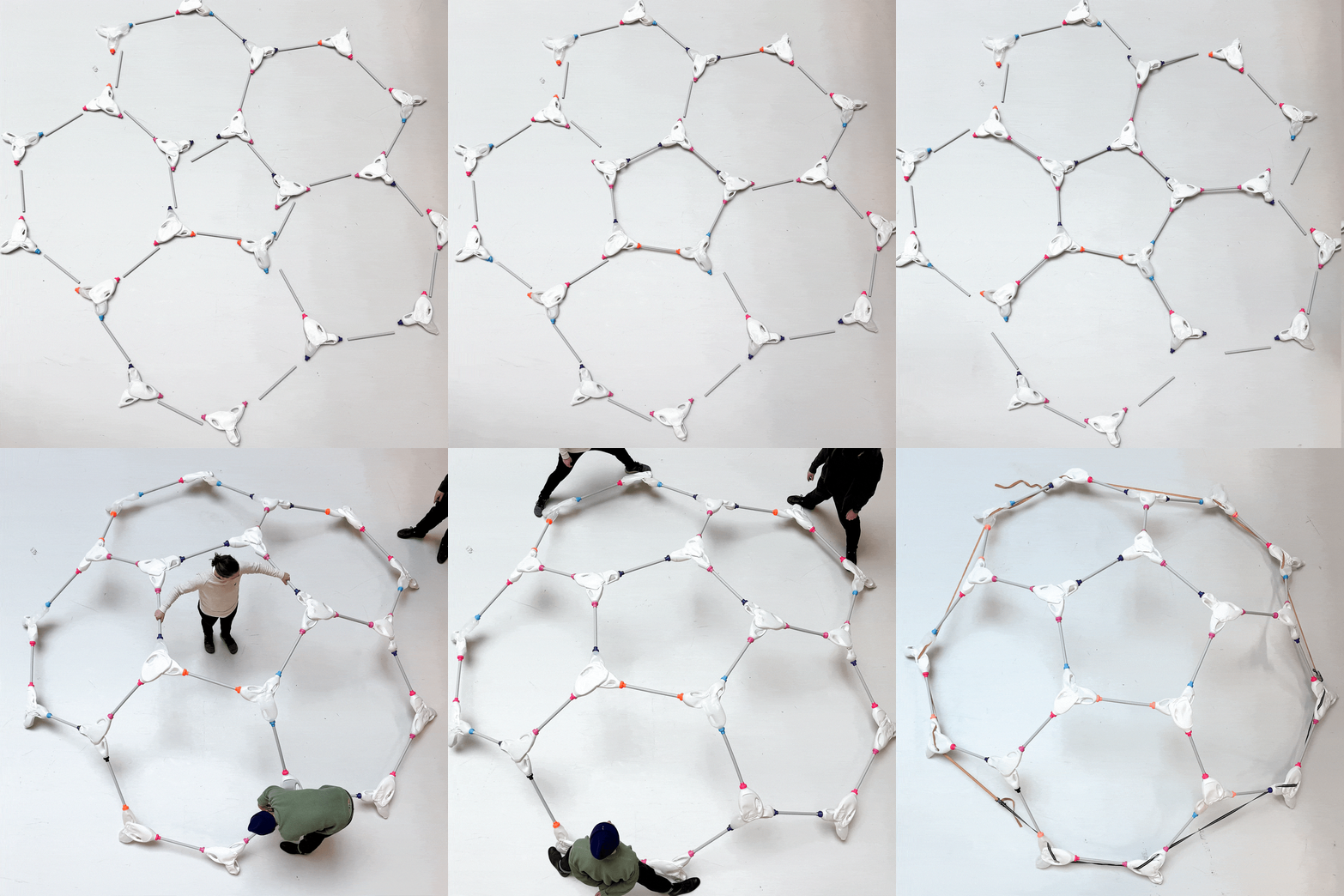
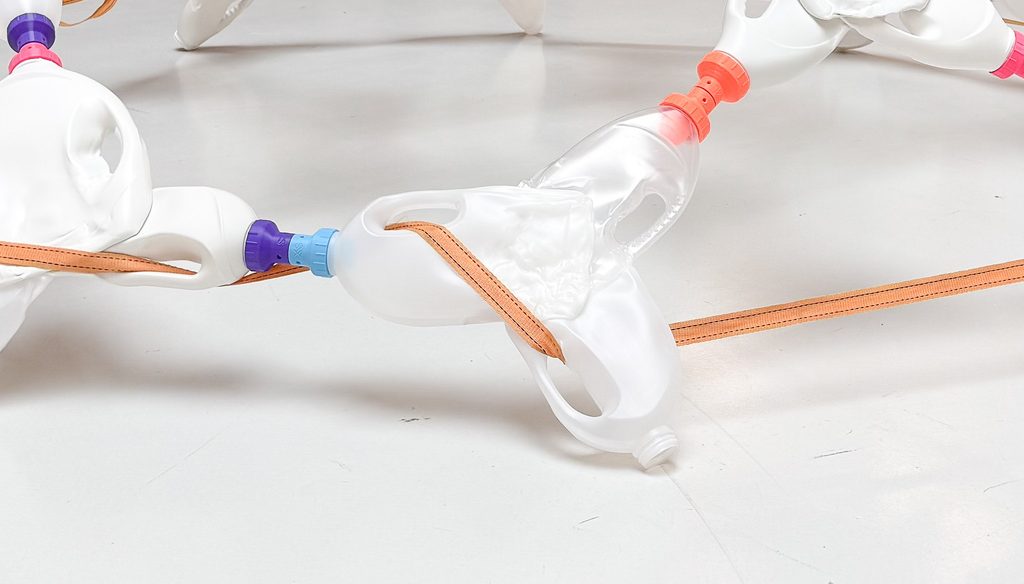
However, it quickly became evident that the structure was not stable enough to withstand tension and compression forces on its own. To compensate for this, we introduced ratchet straps along the lower ring. These were woven through the bottle handles and tightened to increase overall stiffness and prevent the base from spreading.
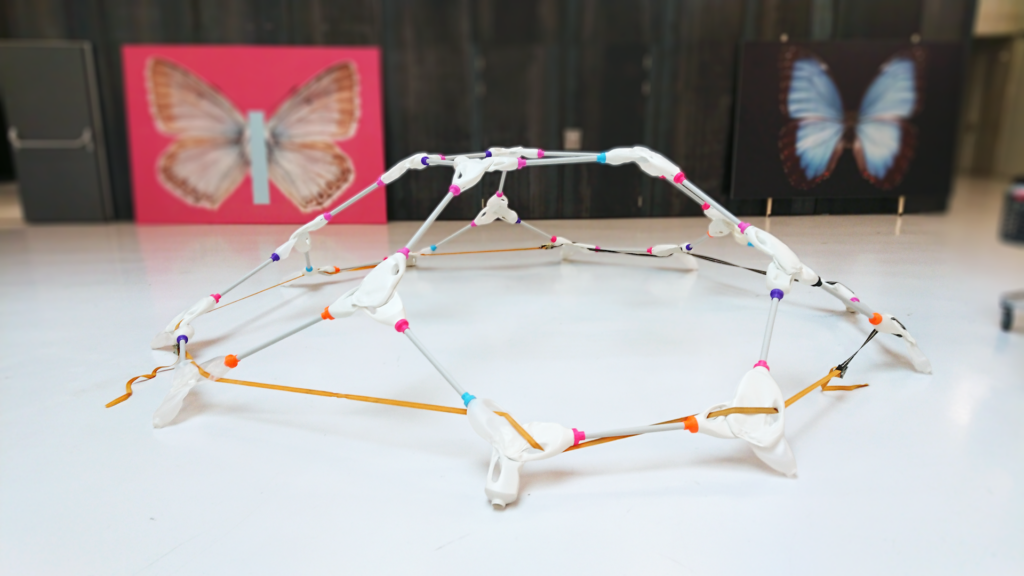
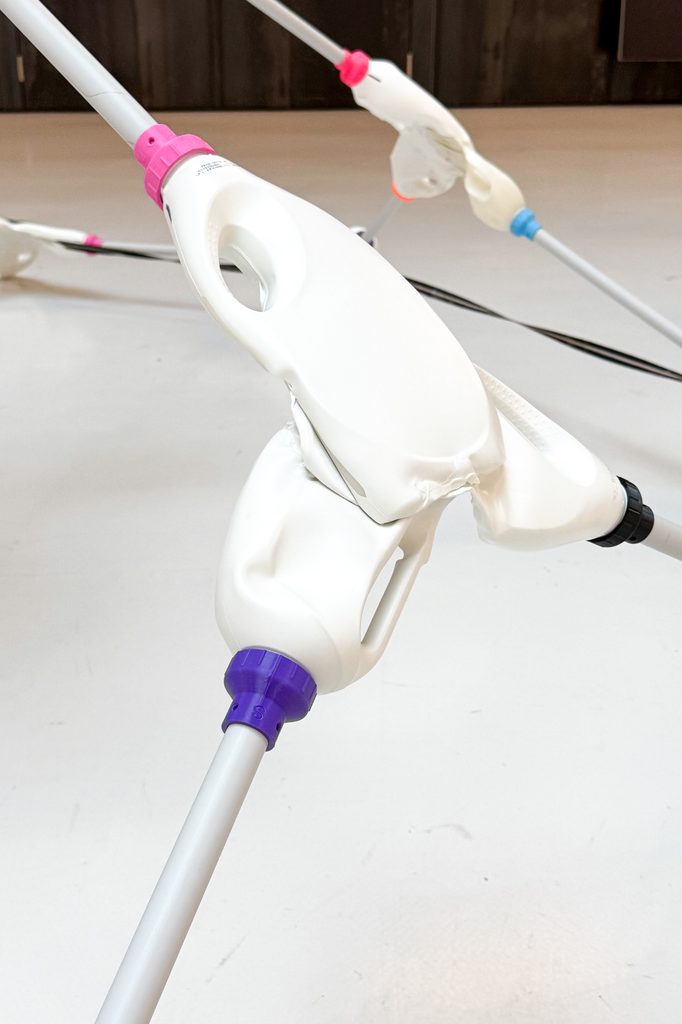
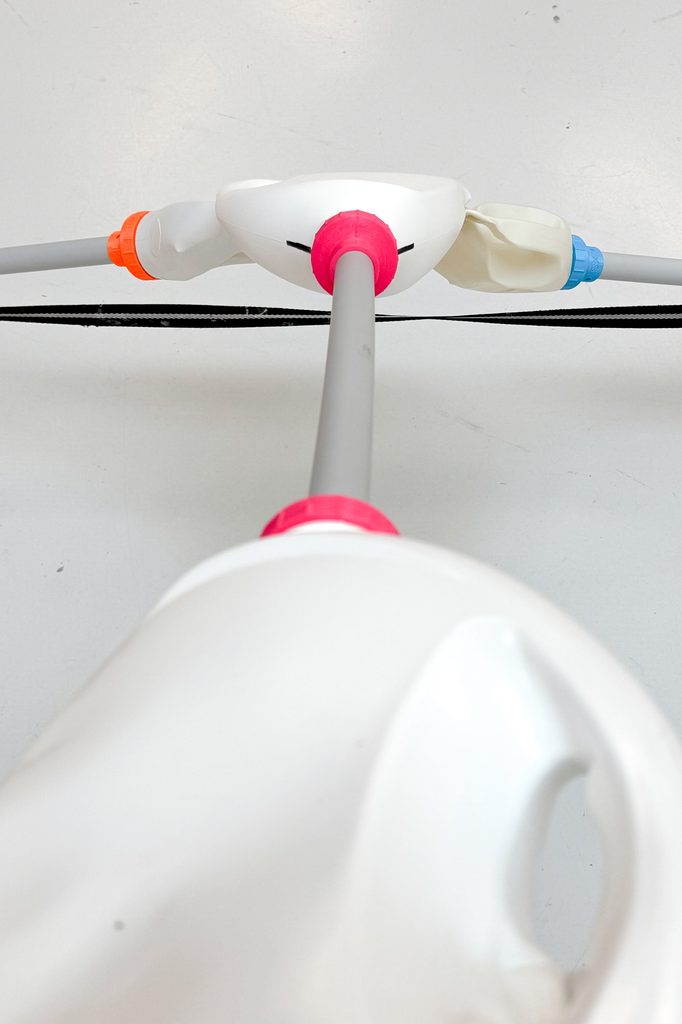
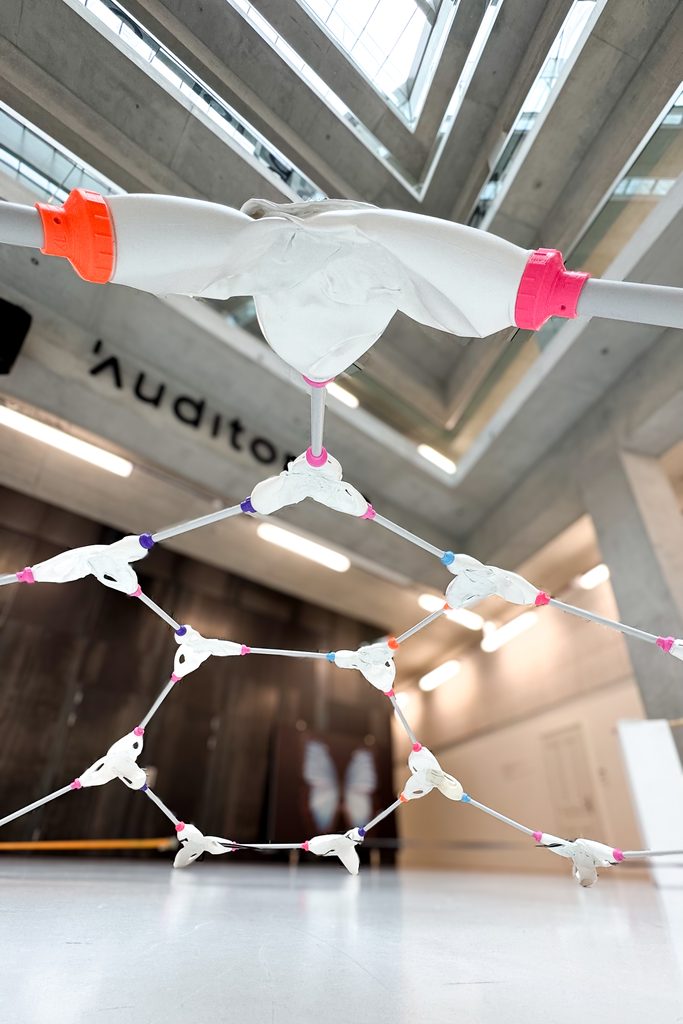
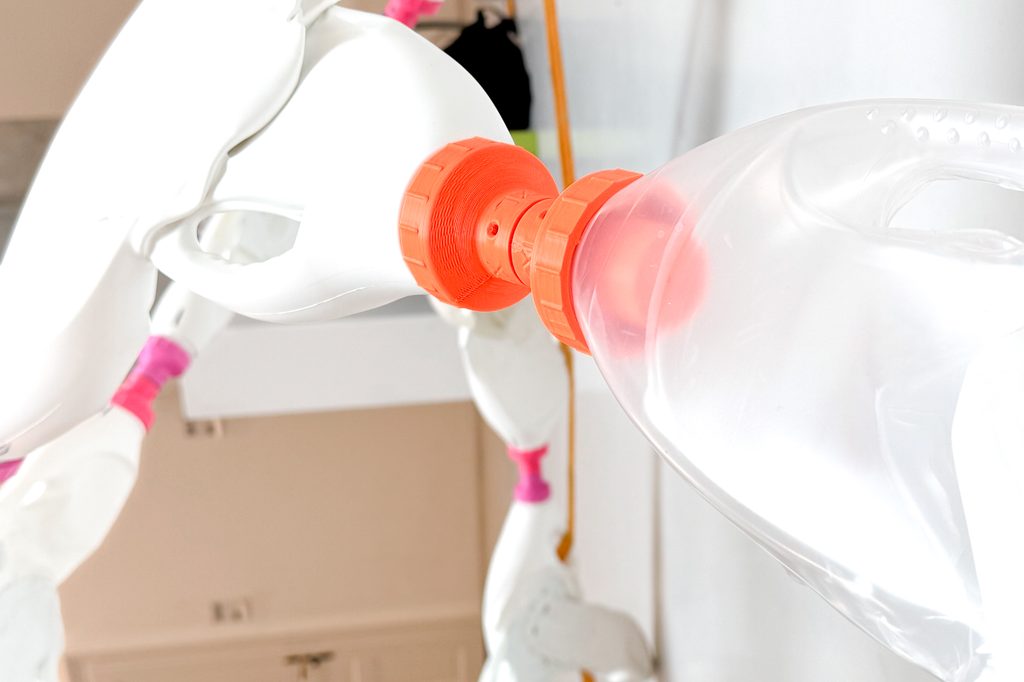
During the assembly, differences in bottle material properties became clearly visible. Transparent bottles proved to be softer than opaque ones. In these areas, the connection between pipe and cap often failed, as the bottle neck deformed under load, leading to loosening of the connection.
As a result, we decided to exclude transparent bottles from further development of this structural system. (However, their flexibility may still be useful in alternative applications where softness can be an advantage)
Second Setup: Reduced Distances
In a second test configuration, we reduced the distance between nodes to a minimum, creating a more direct connection between flex nodes. This resulted in a more compact structure with less pipe bending.
Again, ratchet straps were used to stabilize the system by fixing the endpoints and preventing them from moving apart. The reduced geometry showed improved stability, as the decreased span minimized bending moments in the pipes.
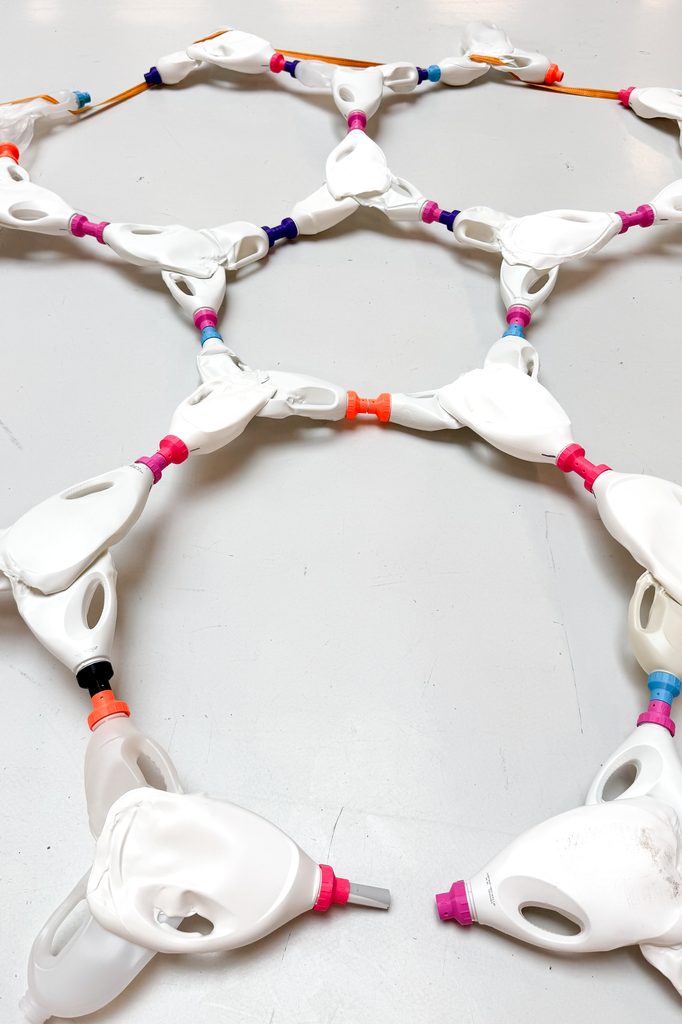
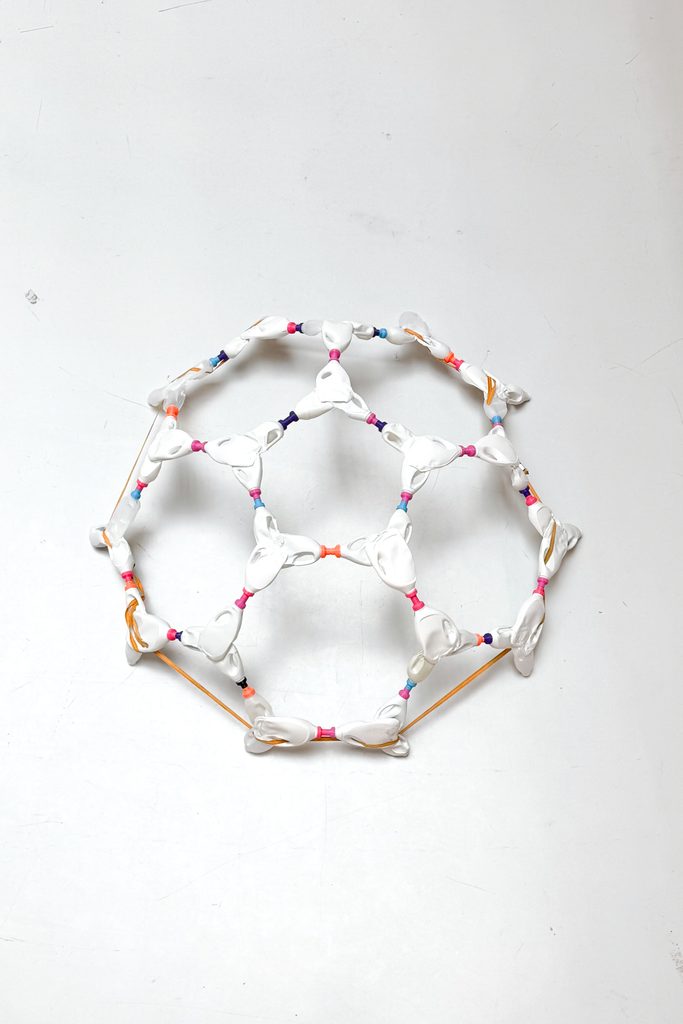
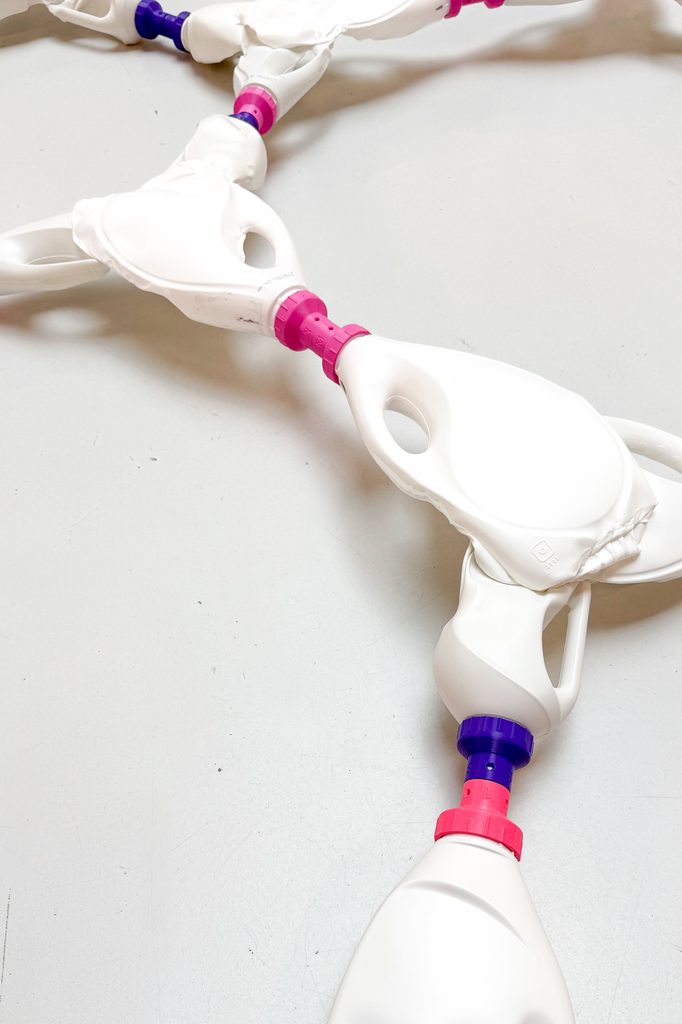
Nevertheless, the issues with transparent bottles persisted. Their lower stiffness led to uneven force distribution, which became visible in local deformations and irregularities in the overall geometry. In these areas, the bottles did not fully follow the intended dome shape.
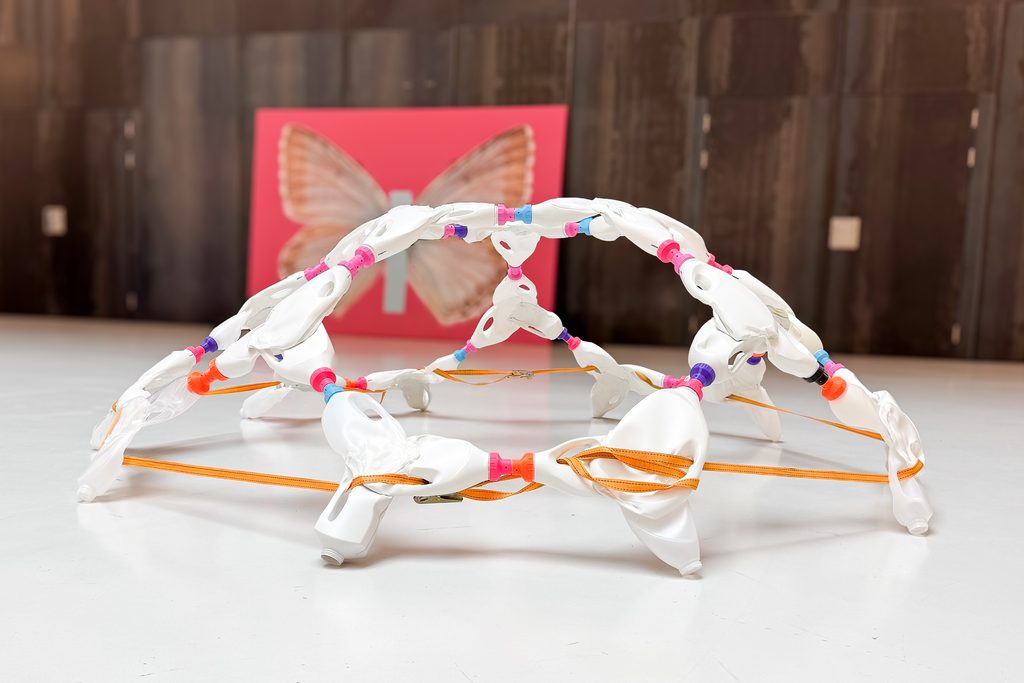
Overall, the test proved successful in identifying key parameters for further development. The experiments showed that:
- material consistency is crucial, with opaque bottles performing significantly better
- additional tension elements, such as straps, are necessary to stabilize the structure
- reducing distances between nodes improves structural behavior