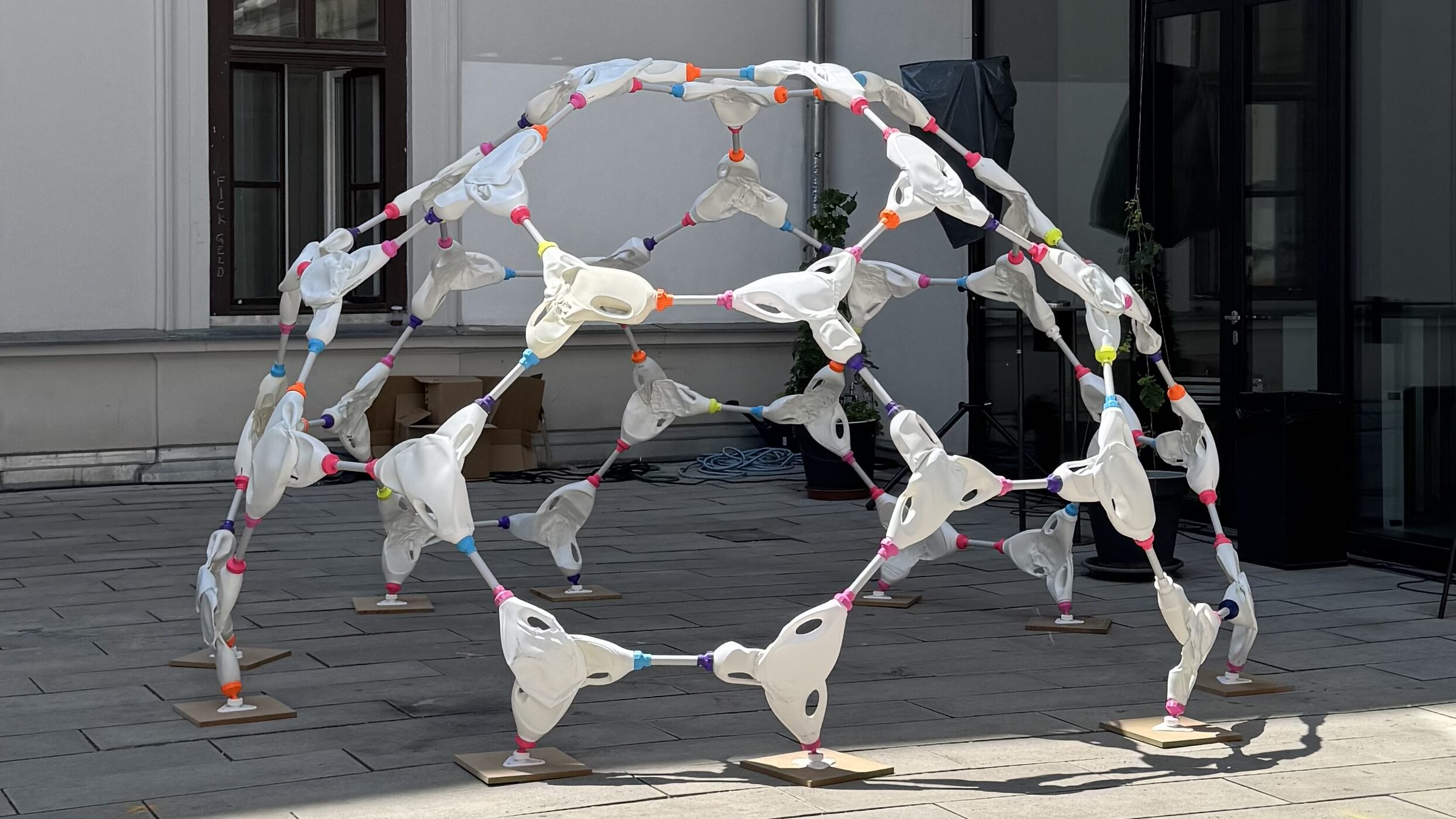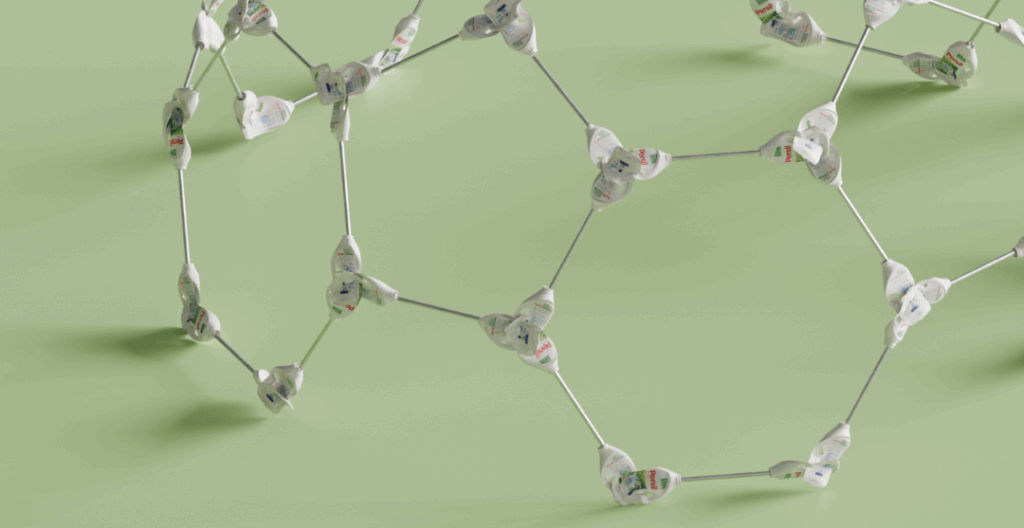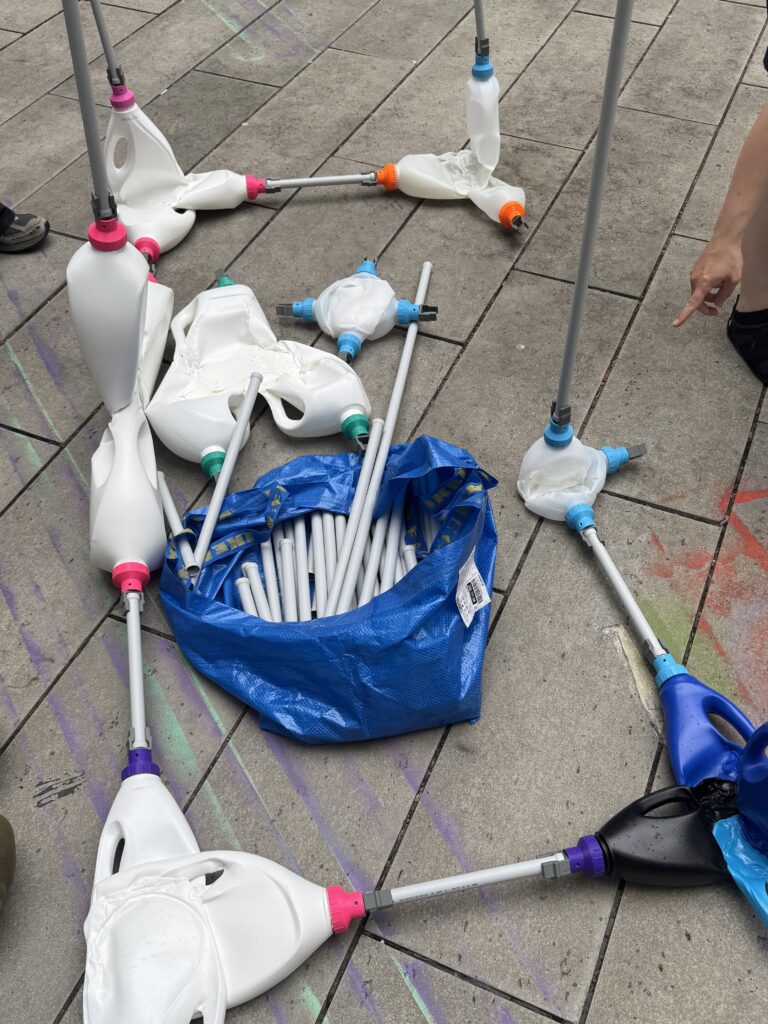
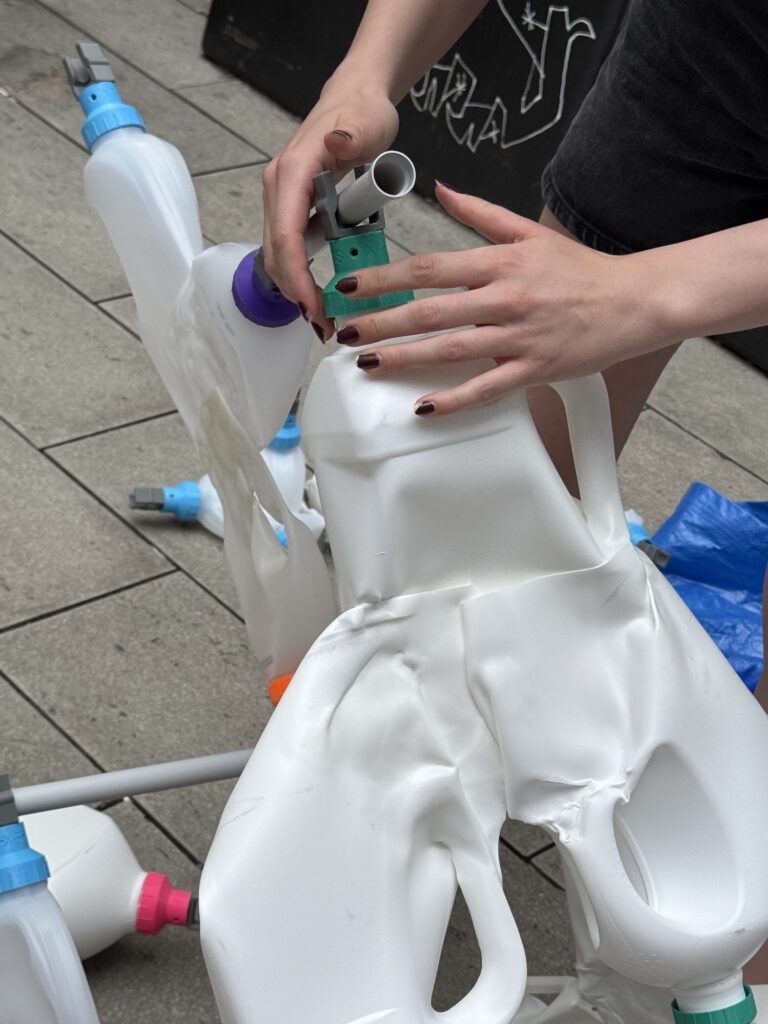
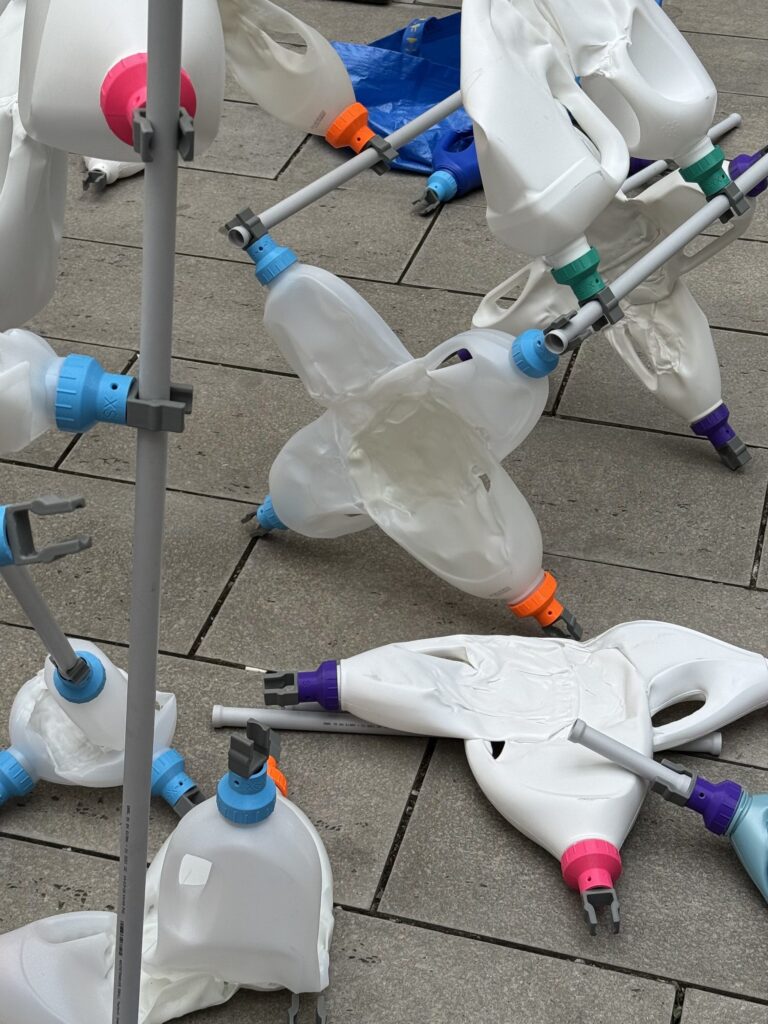
We constructed a quarter dome using detergent bottle Flex Nodes and PVC pipe connections. The prototype consisted of 20 nodes (60 bottles), 25 PVC pipes, and 50 3D-printed ABS connectors.
Continue reading
We constructed a quarter dome using detergent bottle Flex Nodes and PVC pipe connections. The prototype consisted of 20 nodes (60 bottles), 25 PVC pipes, and 50 3D-printed ABS connectors.
Continue reading
Following the insights from our tension tests, we shifted our focus towards redesigning the bottle cap as a connection element. The aim is to develop a 3D-printable cap that allows pipes to be inserted and fixed, enabling the construction of stable systems.
Continue reading
Before proceeding with the construction of a detergent flex-node system, we conducted a series of physical experiments to evaluate which parameters perform best under tensile forces. The goal was to identify the most effective combination of cone geometry and pipe cut configuration.
Continue reading
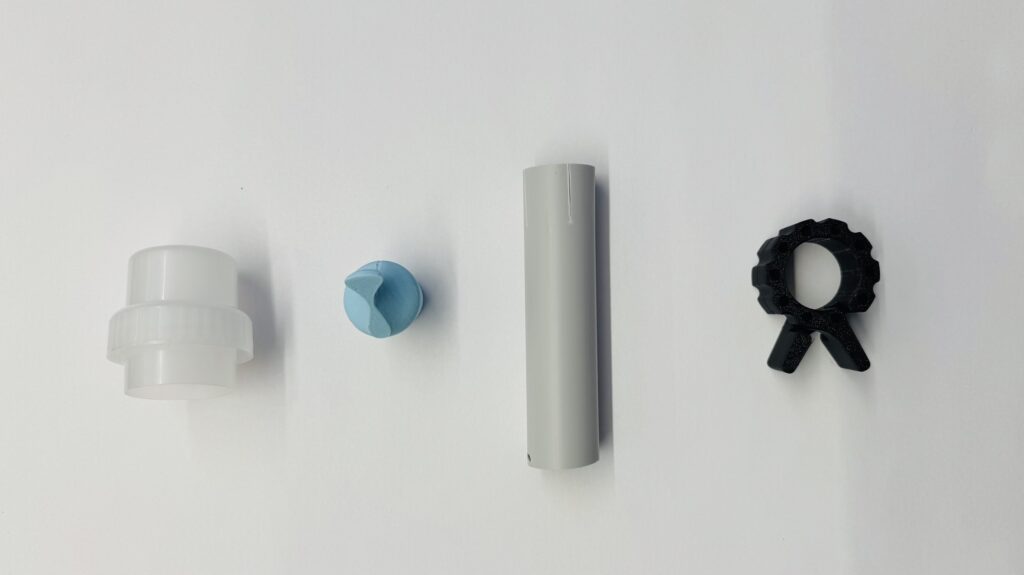
In this study, we explore how to create a simple connection system between the detergent-bottle nodes and PVC pipes. The aim is to develop a connector system that:

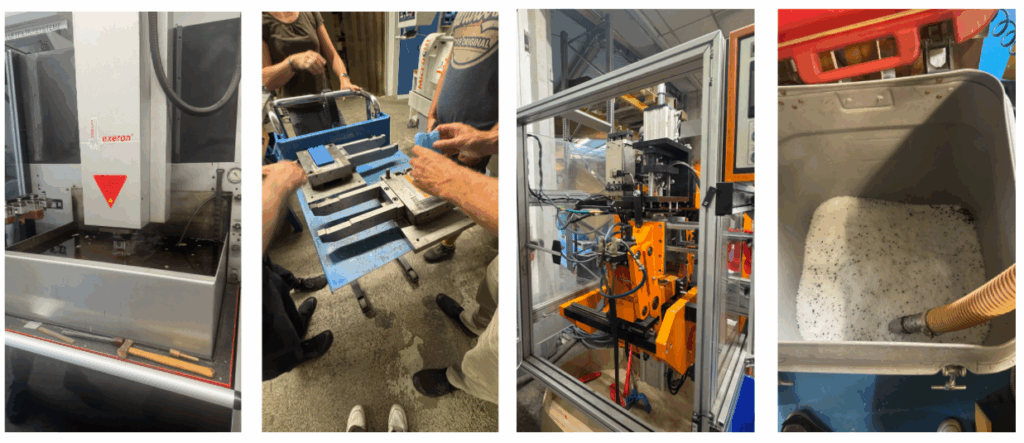
Mid of August, we had the chance to visit Mack. The company is located in Altenmarkt, Austria, just a 30-minute drive from Vienna. Mack specializes in the production of technical plastic components using injection molding and extrusion blow molding, supported by their own in-house mold making.
Continue reading
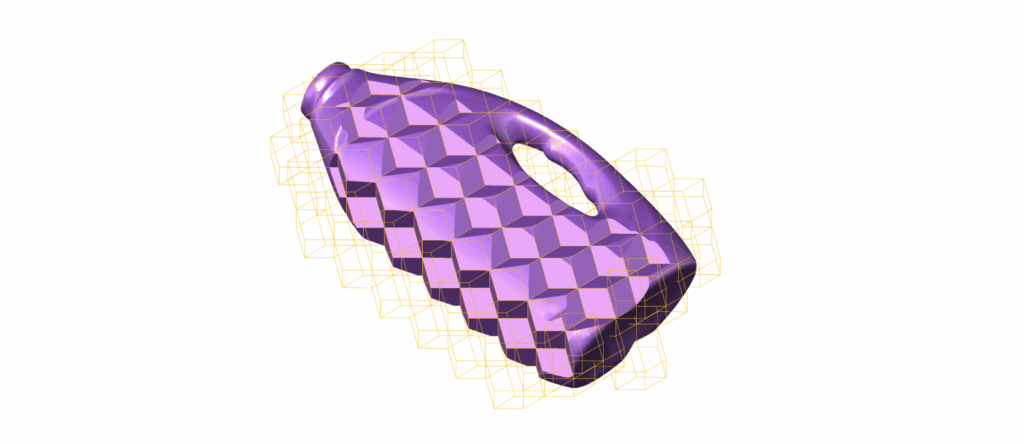
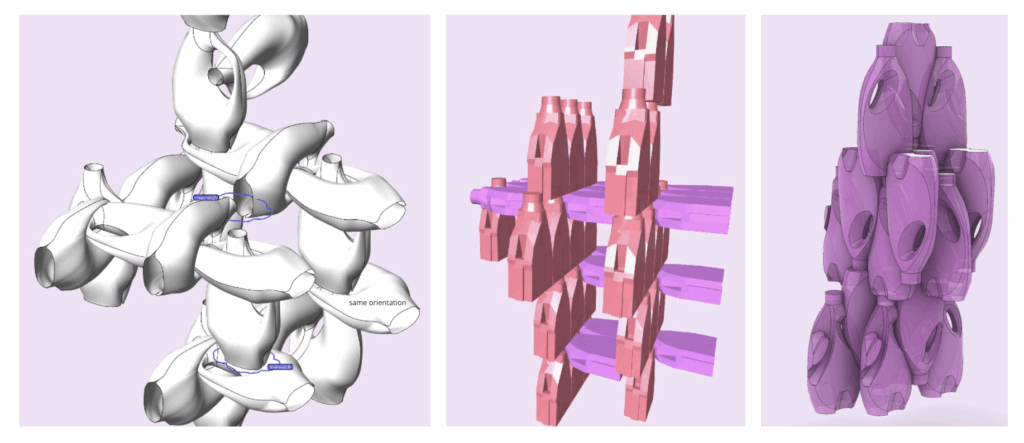
In this part of our ongoing exploration into how detergent bottles can become building blocks, we return to the idea of designing the shape of the bottle. Not by changing the form in complex ways, but by applying what we’ve learned from space-filling geometry.
Instead of completely transforming the bottle, we focused on minimal modifications, while making it suitable for a second life as a modular element.

Learning from the WOBO bottle – (you can read more in our previous blog post) – we were fascinated by how the design embedded reuse directly into the form of the packaging.
We’ve been exploring the idea of giving packaging not just a second life through recycling, but a second function through design. This led us to experiment with how detergent bottles could be transformed into interlocking, modular components, inspired by Japanese joinery, 3D puzzle logic.

We’re returning to the detergent bottle — and to the techniques we explored earlier with pressed plastic panels in the Pearse structure. But this time, the goal is to preserve more of the bottle’s original shape while still transforming it into a structural element.
Continue reading
Recycling plastic into panels for Peter Pearce’s Curved Space structure presents several challenges, from understanding material properties to refining the molding process. Through this series of experiments, we explored different plastic types, tested different melting techniques to create saddle pentagon panels.
Continue reading
For Cluster 3, the goal is to explore thermoplastics, a category of plastics which is suited for projects involving deformation, bending, and reshaping— could be perfect for creating a structure inspired by the principles of Peter Pearce’s “Curved Space Diamond Structure”.
Continue reading