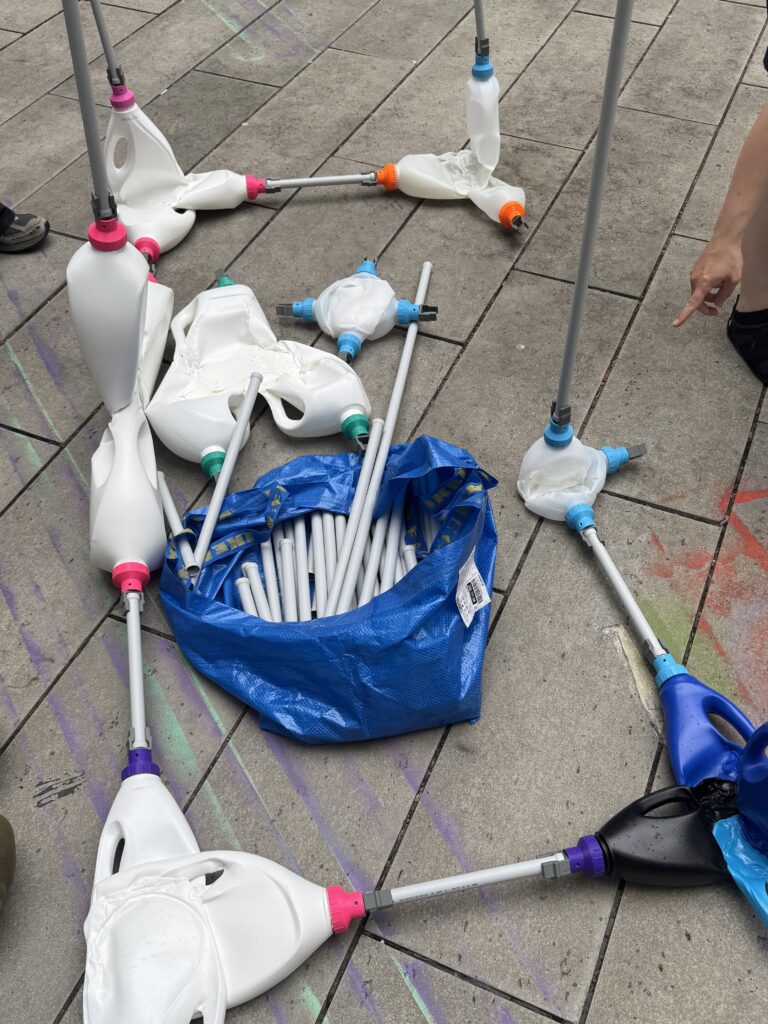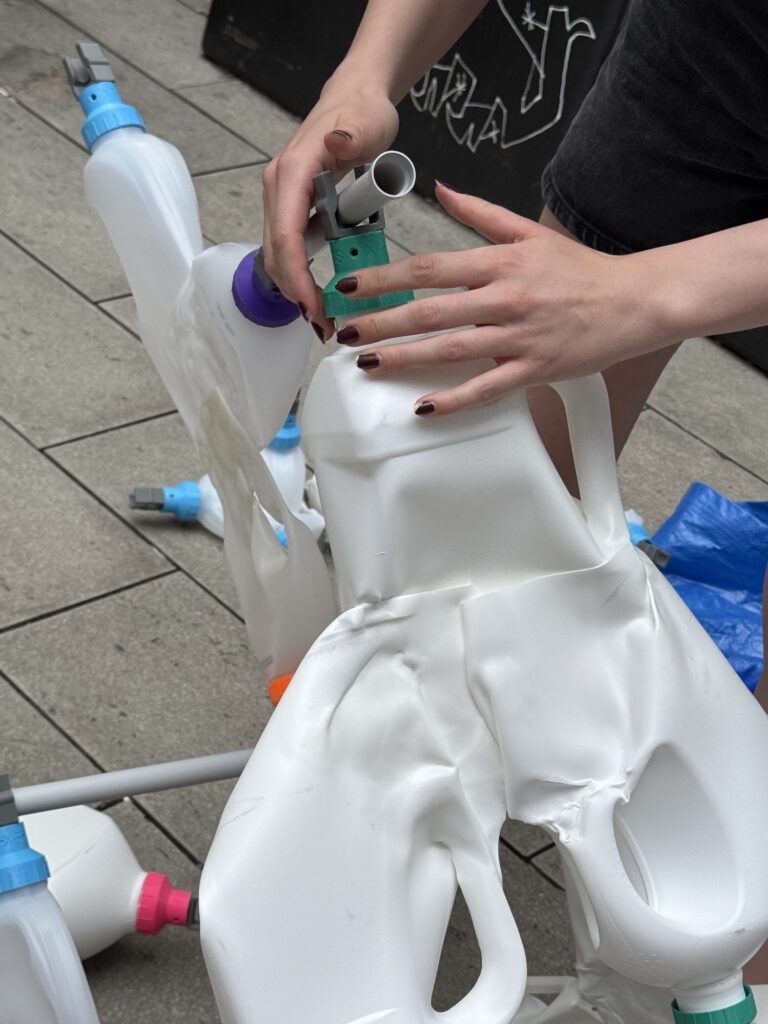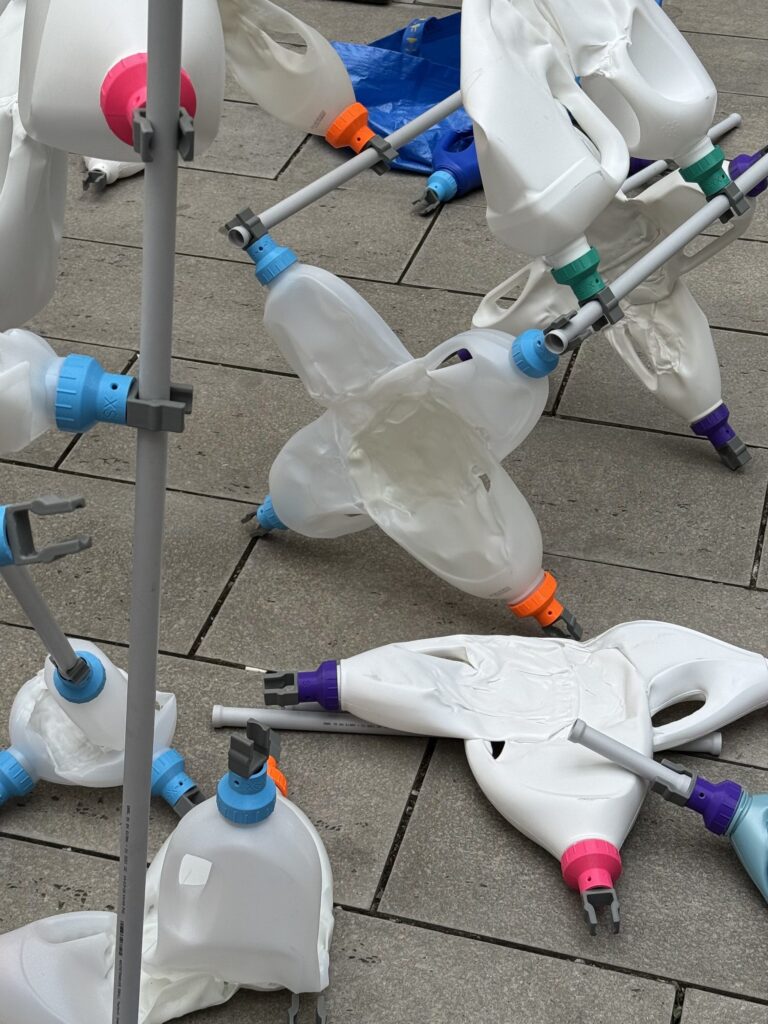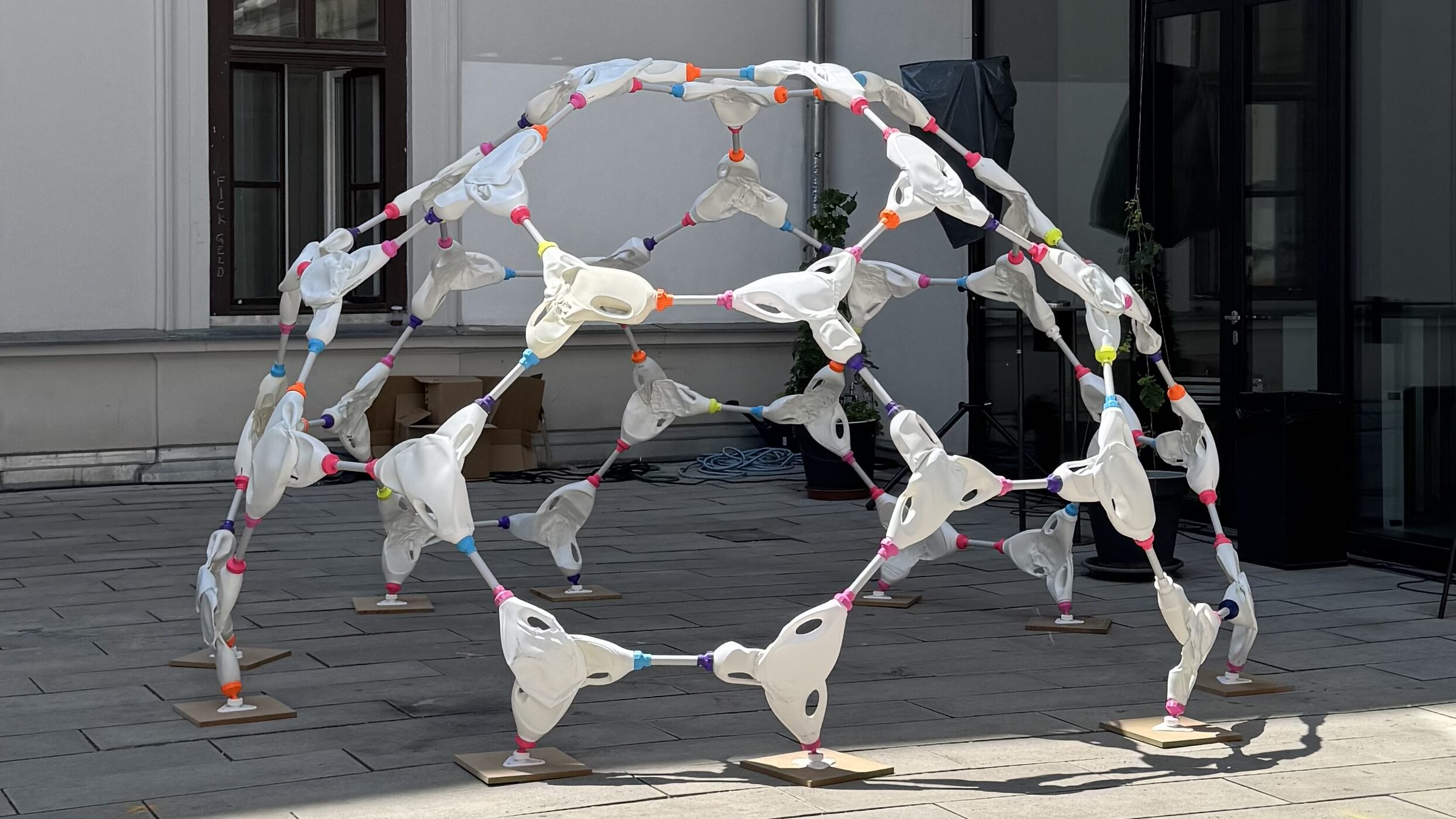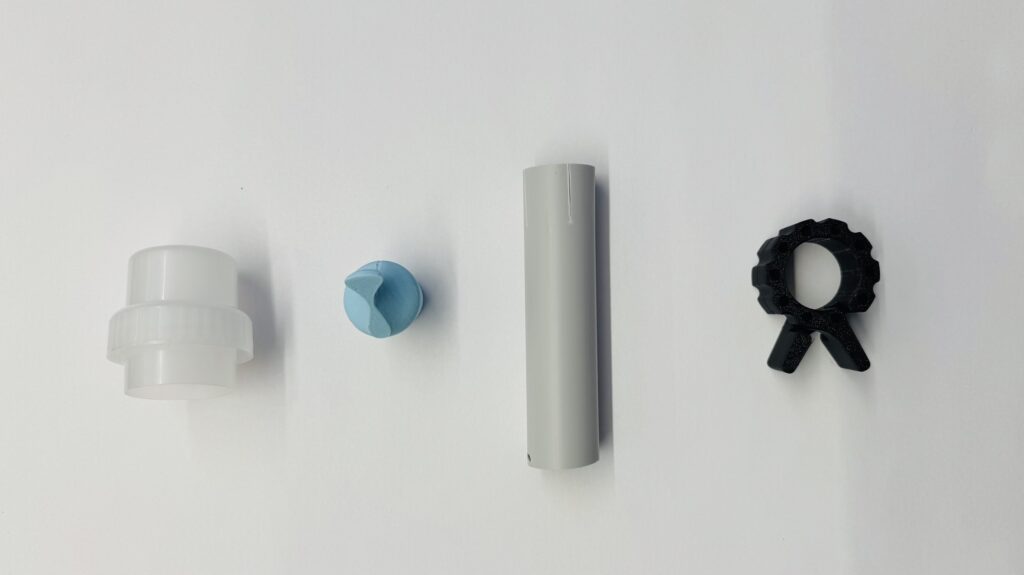
We constructed a quarter dome using detergent bottle Flex Nodes and PVC pipe connections. The prototype consisted of 20 nodes (60 bottles), 25 PVC pipes, and 50 3D-printed ABS connectors.
Continue reading
We constructed a quarter dome using detergent bottle Flex Nodes and PVC pipe connections. The prototype consisted of 20 nodes (60 bottles), 25 PVC pipes, and 50 3D-printed ABS connectors.
Continue reading
Following the insights from our tension tests, we shifted our focus towards redesigning the bottle cap as a connection element. The aim is to develop a 3D-printable cap that allows pipes to be inserted and fixed, enabling the construction of stable systems.
Continue reading
Before proceeding with the construction of a detergent flex-node system, we conducted a series of physical experiments to evaluate which parameters perform best under tensile forces. The goal was to identify the most effective combination of cone geometry and pipe cut configuration.
Continue reading
In this study, we explore how to create a simple connection system between the detergent-bottle nodes and PVC pipes. The aim is to develop a connector system that:

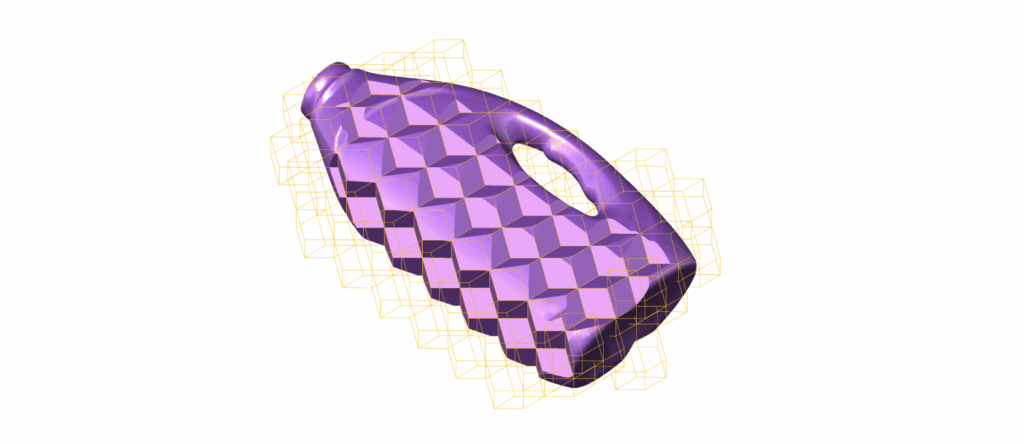
In this part of our ongoing exploration into how detergent bottles can become building blocks, we return to the idea of designing the shape of the bottle. Not by changing the form in complex ways, but by applying what we’ve learned from space-filling geometry.
Instead of completely transforming the bottle, we focused on minimal modifications, while making it suitable for a second life as a modular element.

Learning from the WOBO bottle – (you can read more in our previous blog post) – we were fascinated by how the design embedded reuse directly into the form of the packaging.
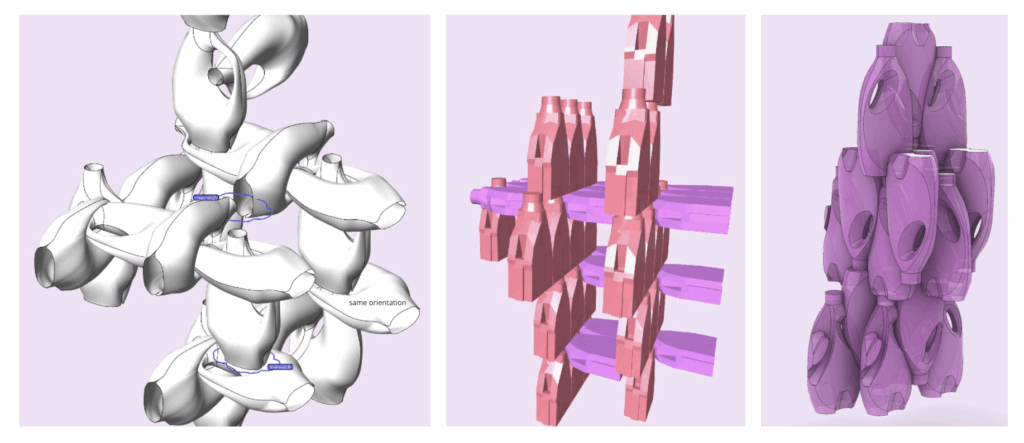
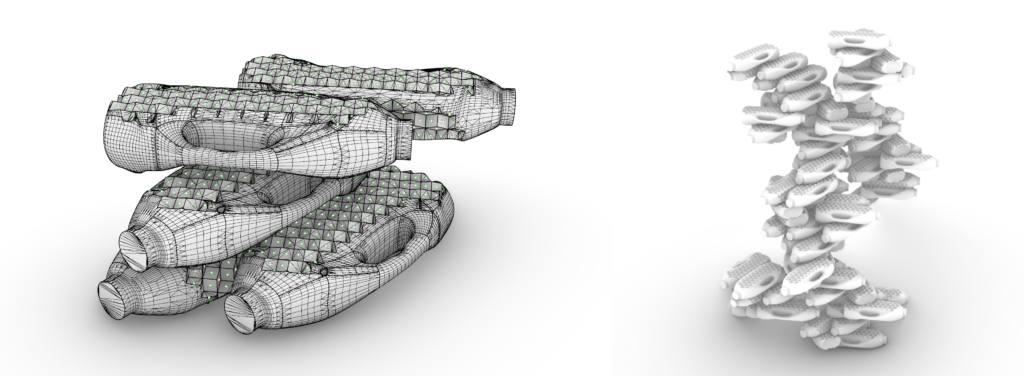
We’ve been exploring the idea of giving packaging not just a second life through recycling, but a second function through design. This led us to experiment with how detergent bottles could be transformed into interlocking, modular components, inspired by Japanese joinery, 3D puzzle logic.