
Following the insights from our tension tests, we shifted our focus towards redesigning the bottle cap as a connection element. The aim is to develop a 3D-printable cap that allows pipes to be inserted and fixed, enabling the construction of stable systems.
One of the first challenges was to understand whether bottle caps follow standardized dimensions and how many variations are required to cover a wide range of bottles.
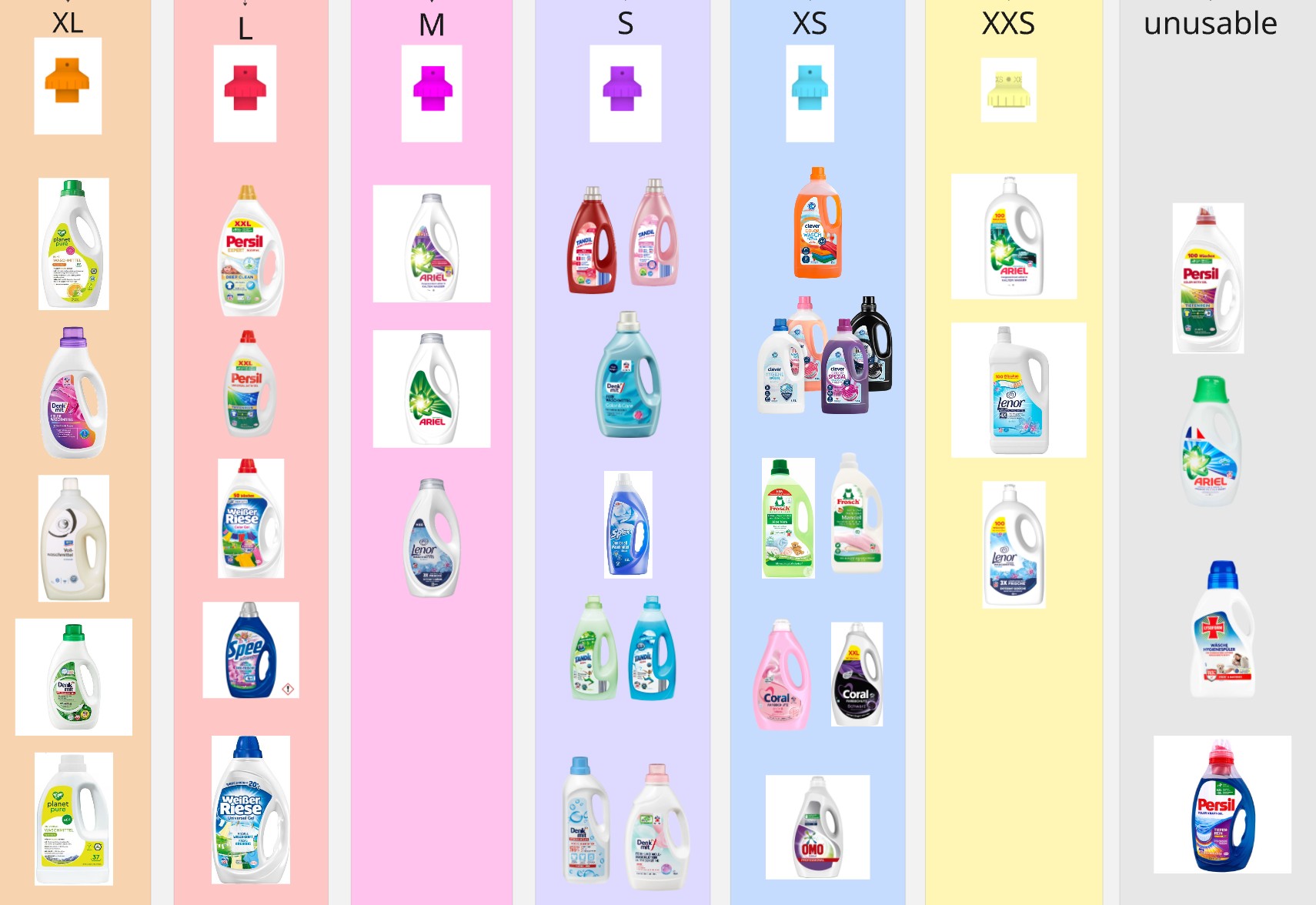
After initial research and several test prints, we identified six cap sizes (XXS to XL). These sizes cover a large portion of commonly available bottles in Austria.
While the goal was to reduce the number of different cap types, certain bottles remain incompatible: Bottles with uncommon cap diameters and bottles with additional inserted components or inner fittings. These are excluded from the system, as adapting to them would significantly increase complexity.
Here an overview which bottles belong to which size:
As a first step, we developed a simple cylindrical connection element.
The prototype allowed:
- Screwing the connection onto the bottle
- Insertion of a pipe into the cap
- Mechanical fixation using screws
The screws ensured stability under tension, while the closed end (1st photo) stabilized the system under pressure.
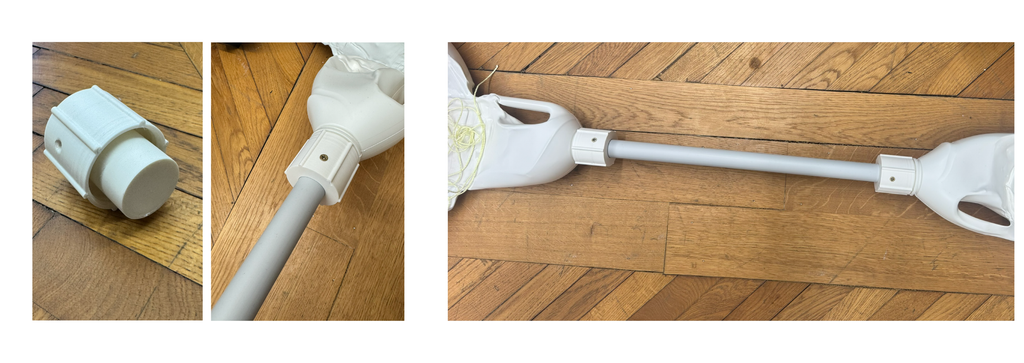
We refined the design with the aim of reducing the amount of printing material while simultaneously improving usability and handling. The resulting cap geometry consists of a lower threaded part, adapted to the bottle neck and available in six different sizes, and an upper cylindrical connector that matches the diameter of the pipe. In our case, the connector is designed for PVC pipes with a diameter of 25 mm. However, this parameter can easily be adjusted depending on the material or pipe system used, allowing for flexibility within the overall setup.
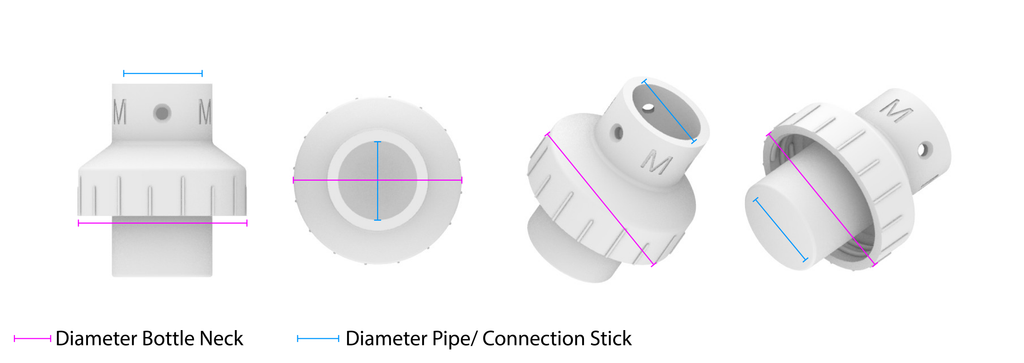
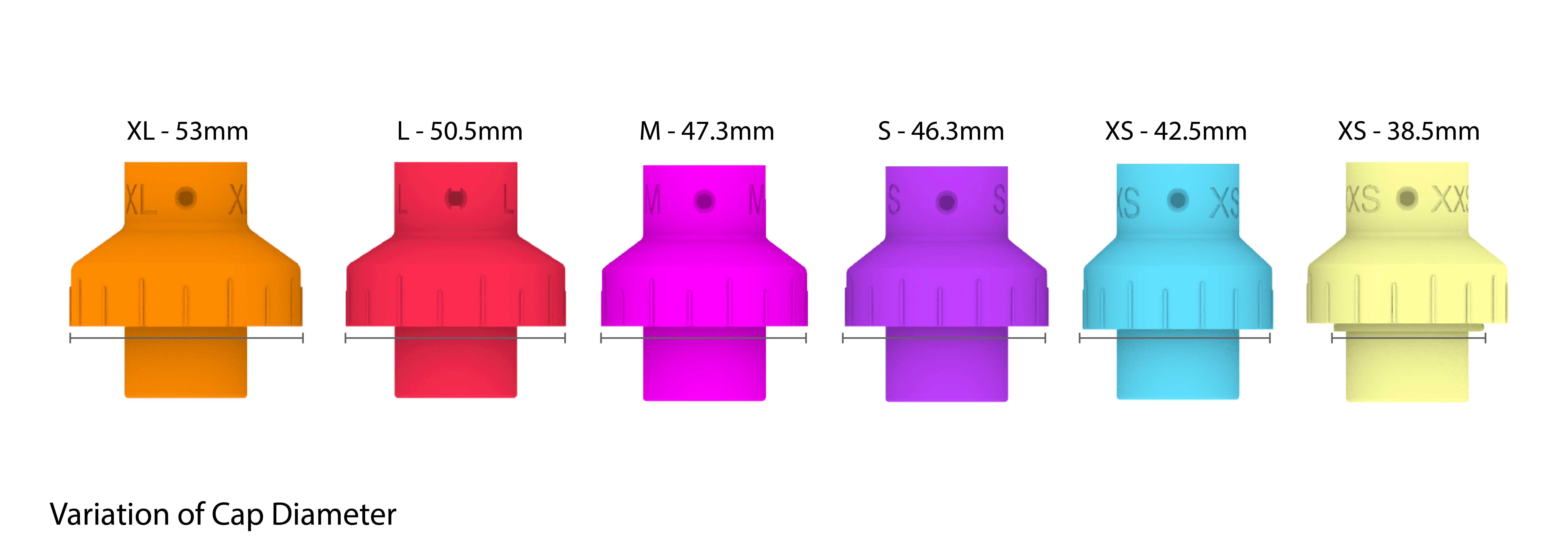
The connection system follows a simple and consistent principle: while the pipes remain standardized across all connections, the cap size varies depending on the bottle used. This creates a system that is both flexible and controlled.
For each node, the selected bottle defines which cap size is required. Once this is identified, the corresponding cap can be 3D-printed from ABS (sponsored by Nobufil) and combined with the same set of pipe elements.
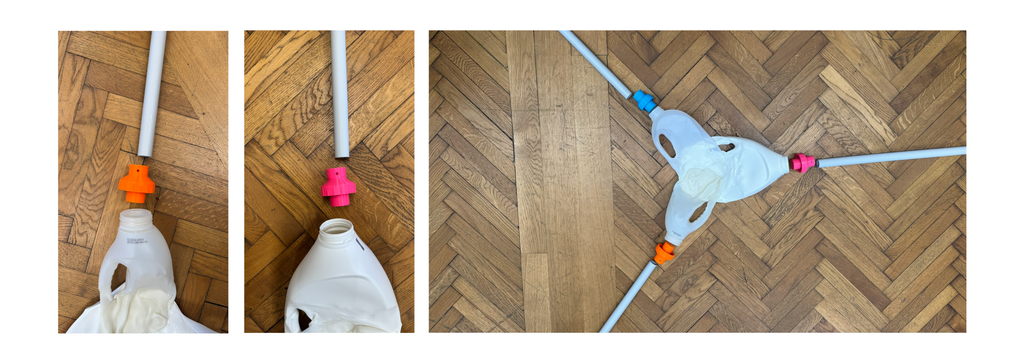
With the finalized cap design, the next step is to 3d print many more caps and fabricate nodes. These components will then be assembled into a first larger-scale prototype: a quarter dome structure, which will allow us to test the system under spatial and structural conditions.