
Before proceeding with the construction of a detergent flex-node system, we conducted a series of physical experiments to evaluate which parameters perform best under tensile forces. The goal was to identify the most effective combination of cone geometry and pipe cut configuration.
Test Setup
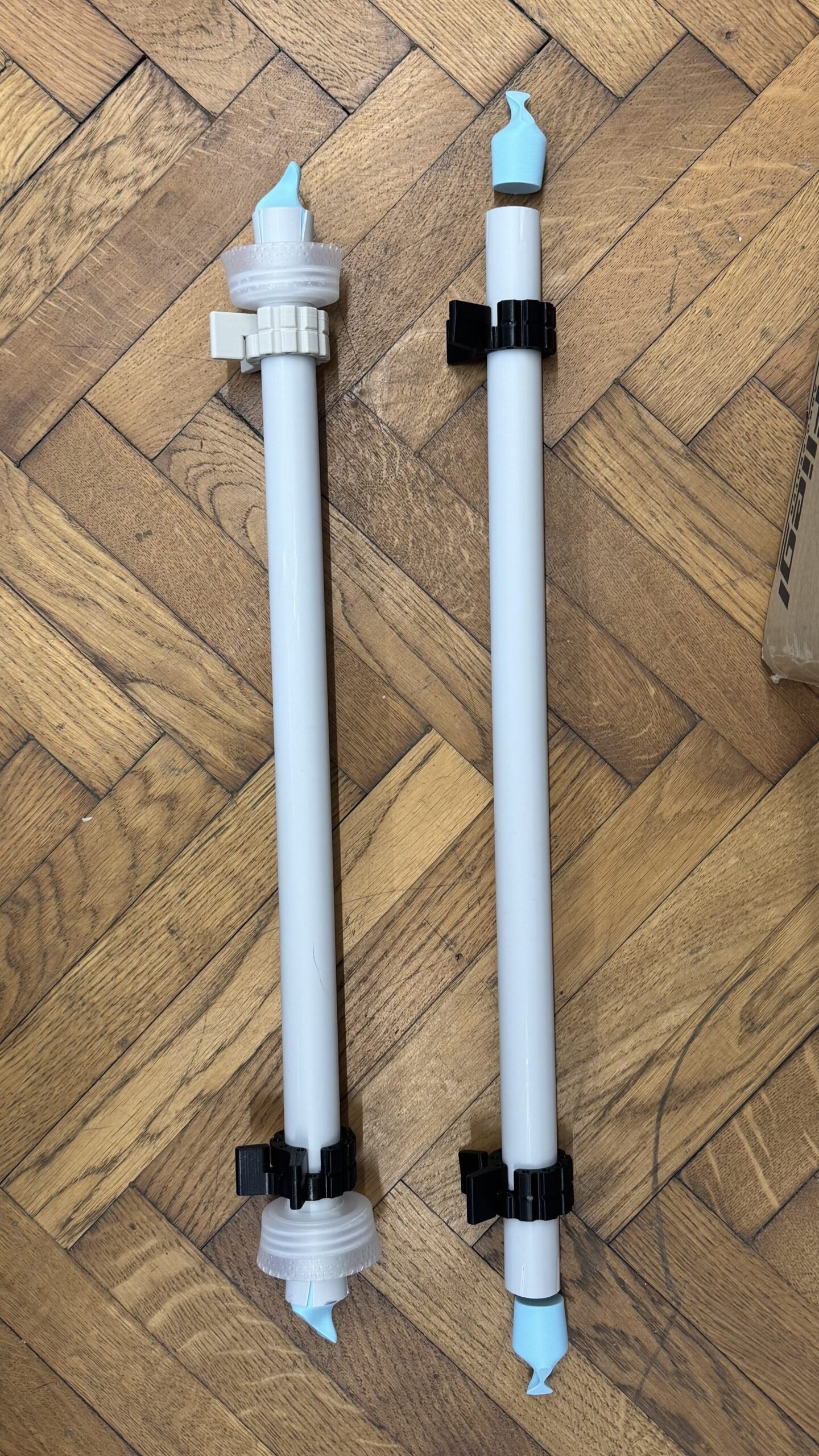
For the cone geometry, we preselected two angles: 5° and 7.5°, each in two sizes (20mm, and 26mm length). This resulted in four different cone variations.
For the pipes, we defined four cutting configurations:
- 4 cuts × 15 mm
- 4 cuts × 20 mm
- 6 cuts × 15 mm
- 6 cuts × 20 mm
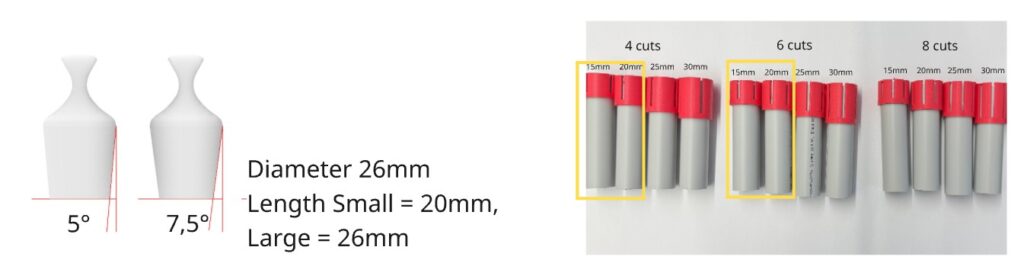
Each test combined one cone with one pipe configuration, in total 16 constellations.
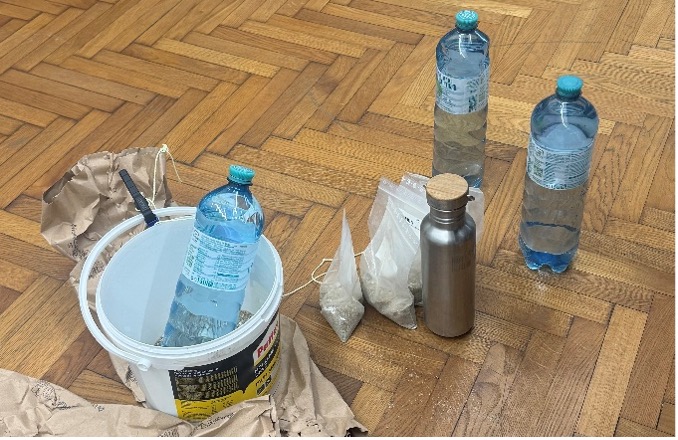
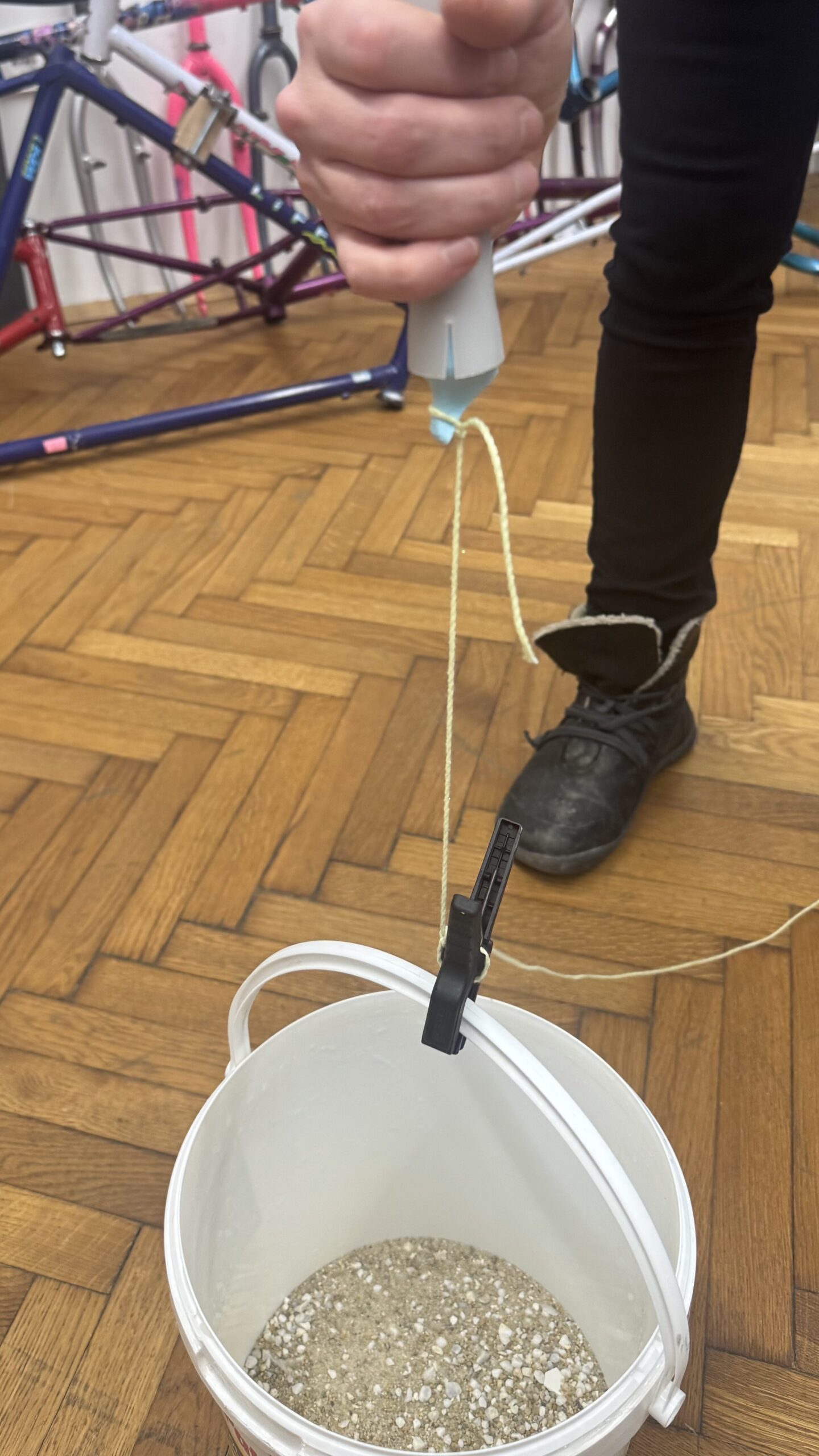
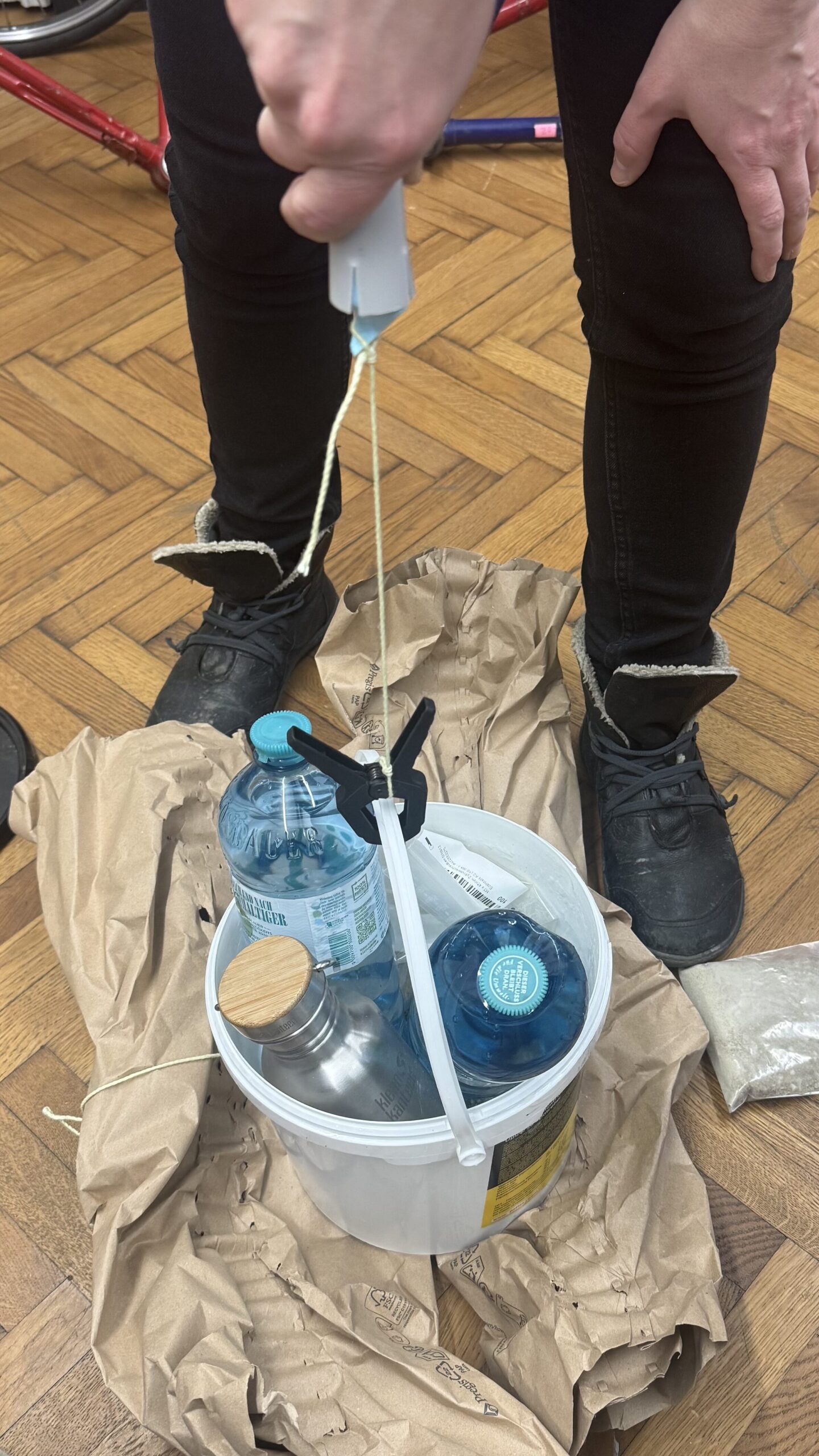
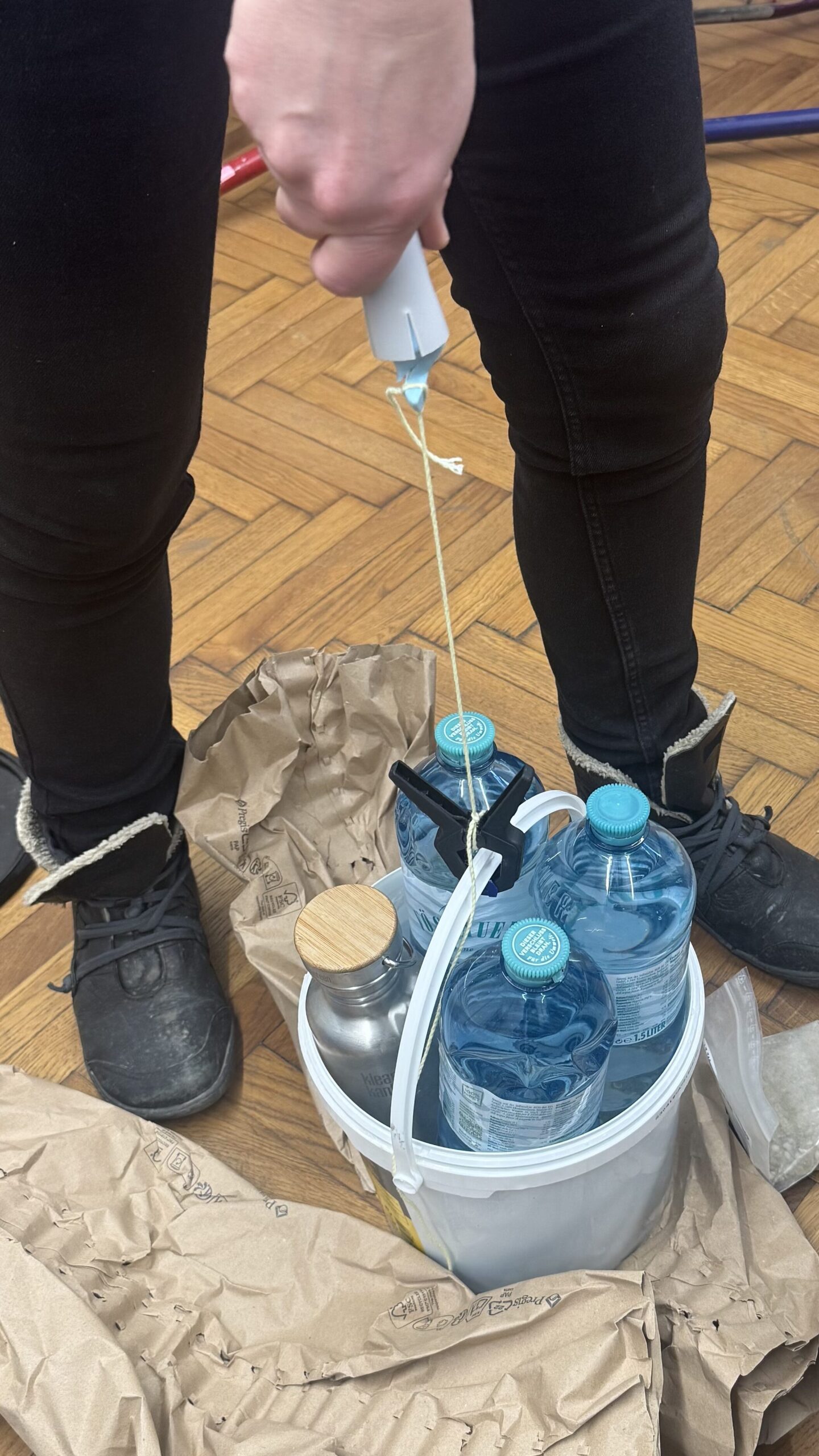
To simulate tensile load, a string was wrapped around the cone and attached to a bucket. The bucket was gradually filled with weight, starting with sand (~675 g), and incrementally increased using:
- sand packages (200 g each)
- a Klean Kanteen bottle (1 kg)
- Vöslauer bottles (1.5 kg)
The cone was fully pressed into the cut pipe and held vertically, with the cone facing downward. Weight was added until the cone slipped out of the pipe. The maximum load sustained before slipping was recorded as the performance indicator.
To ensure consistency, a new pipe was used for each test, avoiding material fatigue or deformation from previous trials.
An overview of all tested combinations and their respective load capacities is summarized in the table below.
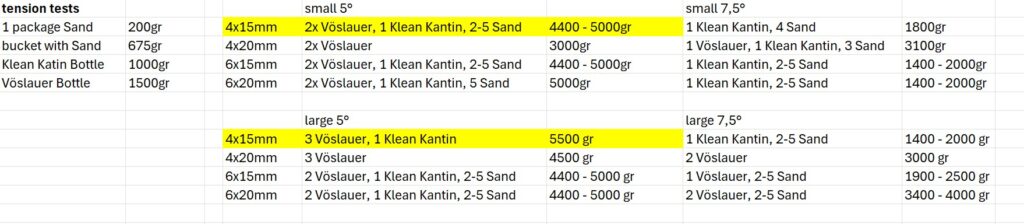
Overall, the experiments showed that:
- 5° cones perform better than 7.5° cones
- The most effective pipe configuration is 4 cuts with 15 mm length
This combination demonstrated the highest resistance under tension.
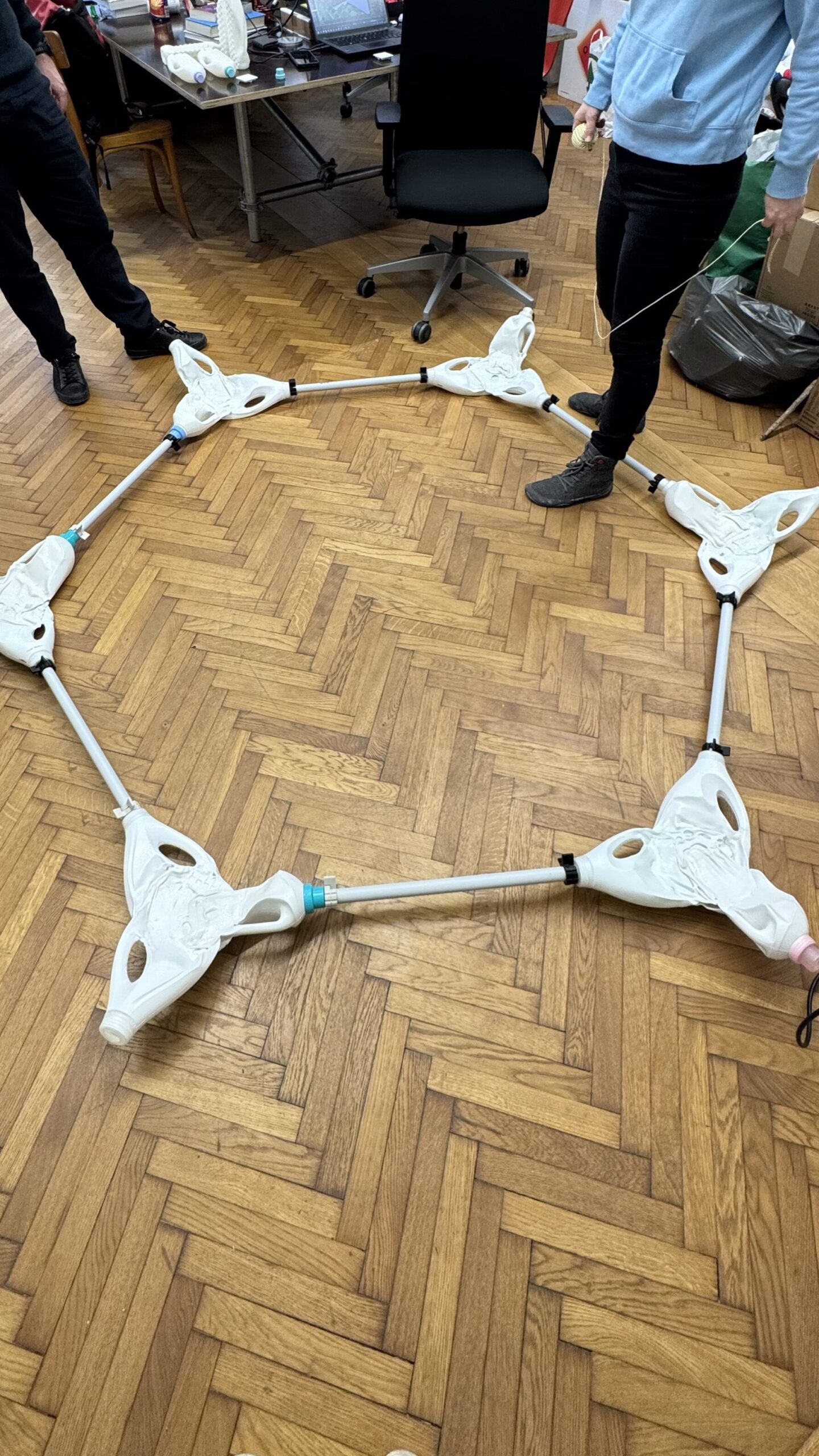
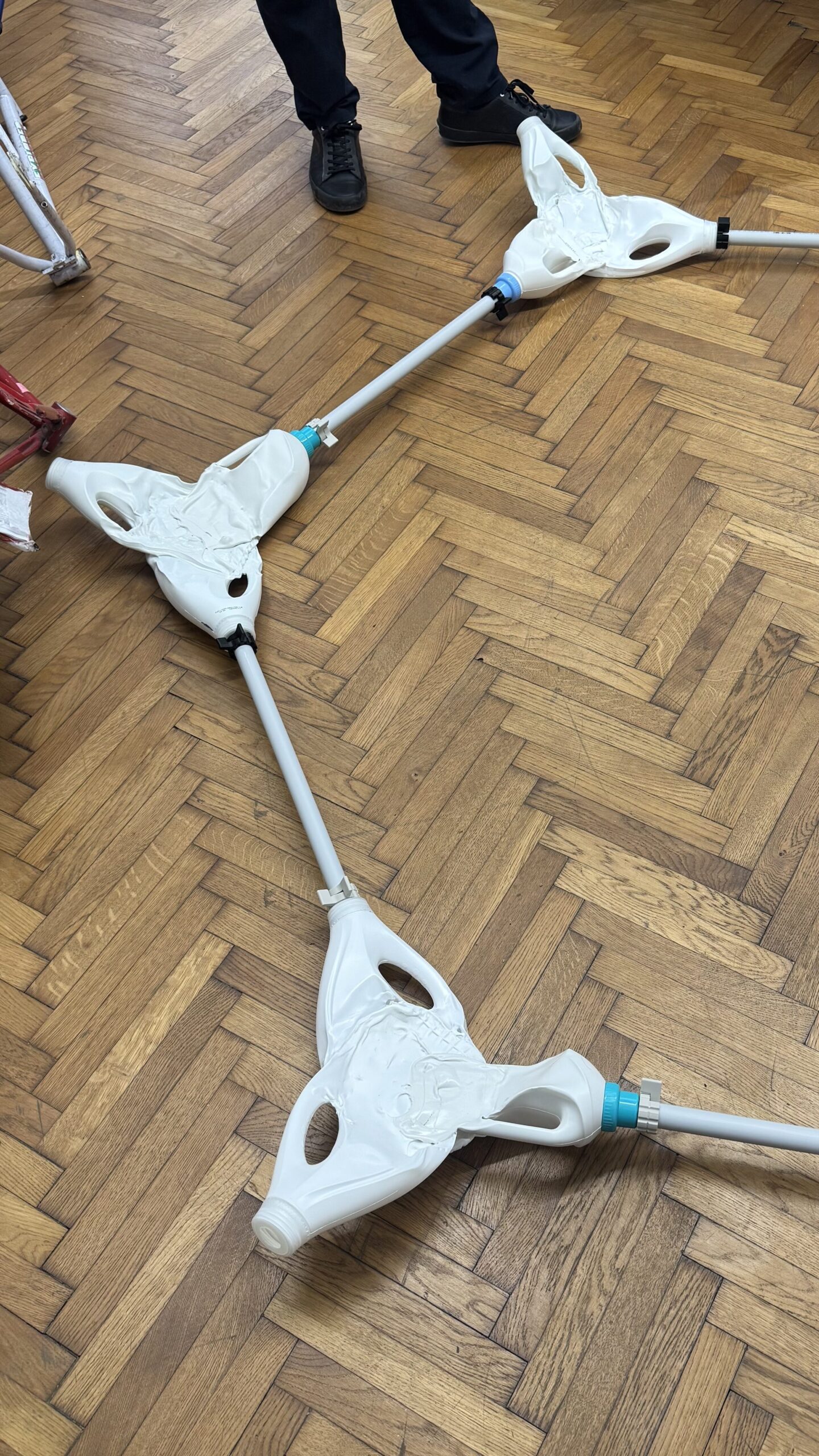
This setup was used for the first structural test: a hexagonal arrangement consisting of six nodes and six connecting pipes.
Testing Hexagonal Structure
During the assembly of the hexagonal structure, it quickly became obvious that the current connection system is insufficient for structural applications.
The main issues observed were:
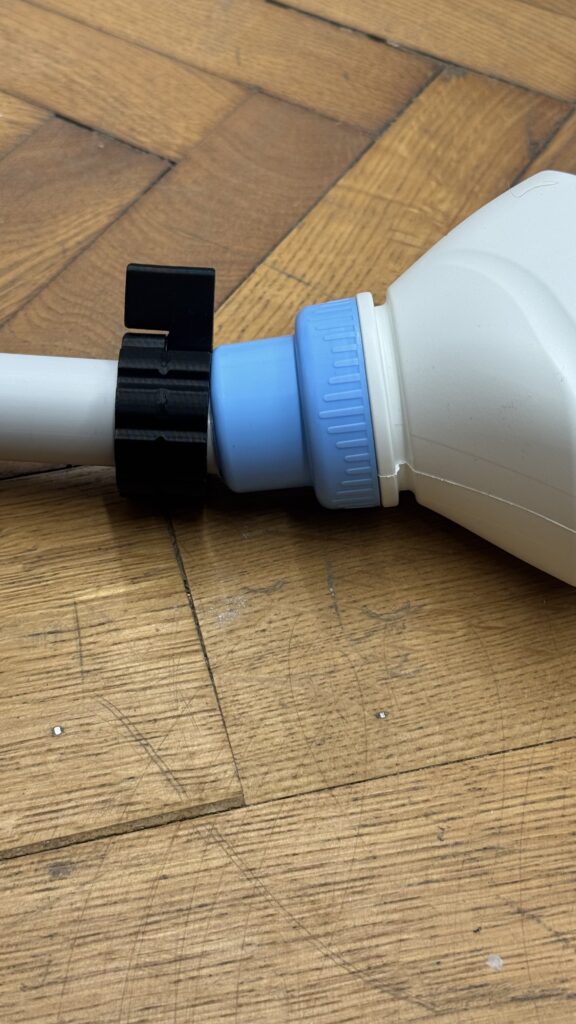
- The bottle caps are too thin and flexible
- Despite fitting well, the pipes still have significant play within the caps
- This results in overall instability of the structure
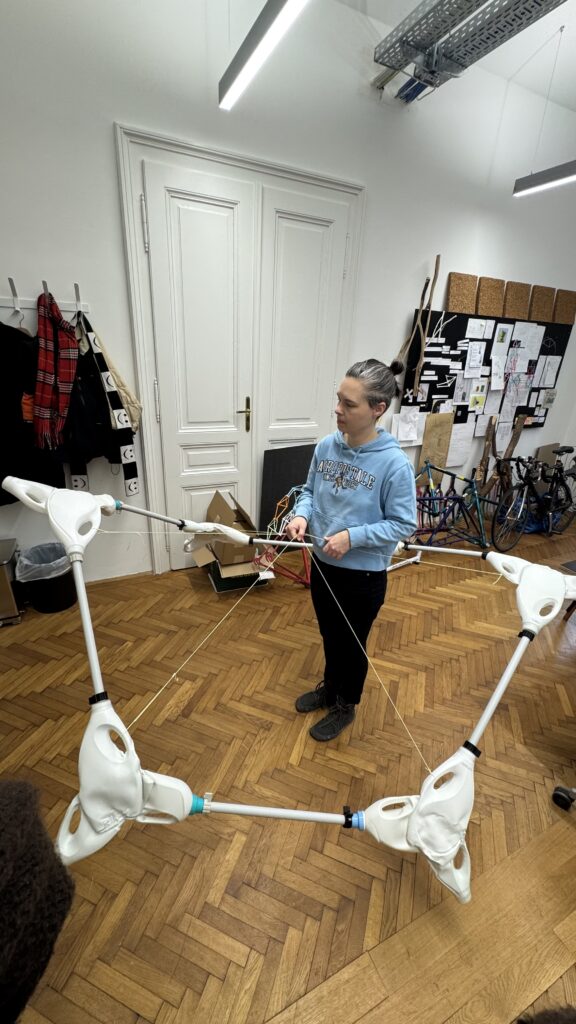
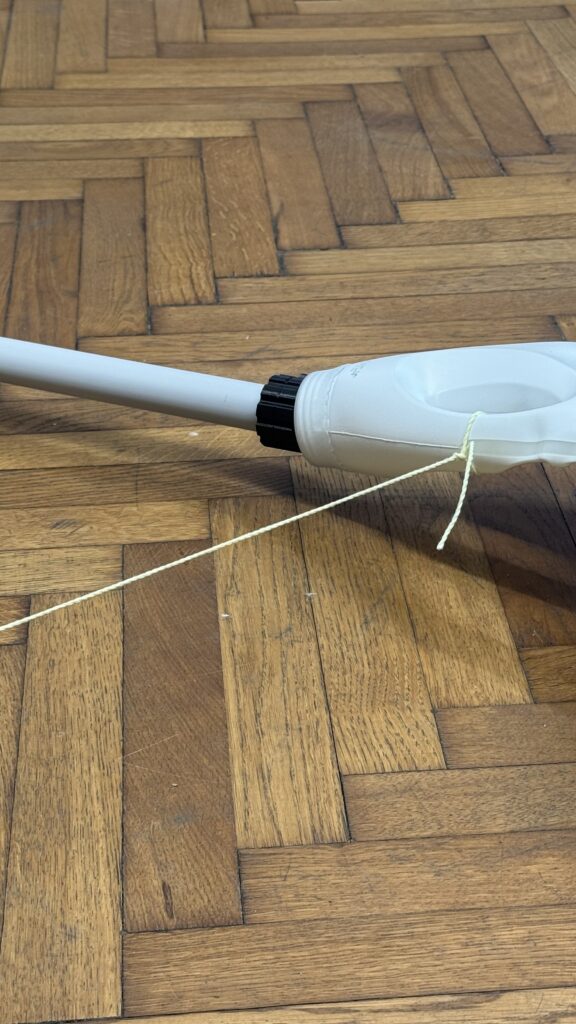
We attempted to stabilize the system by introducing tension cables within the hexagon, connecting opposite nodes. While this slightly improved rigidity, the structure remained unstable. The primary failure mechanism is caused by bending moments at the cap connections.
Although reusing bottle caps initially appeared promising, the experiments clearly show that they are too weak for structural use in their current form.
As a result, the next step is to redesign the connection element:
- Develop a new cap geometry
- Integrate a defined opening for the pipe
- Increase connection length to better fix the pipe position